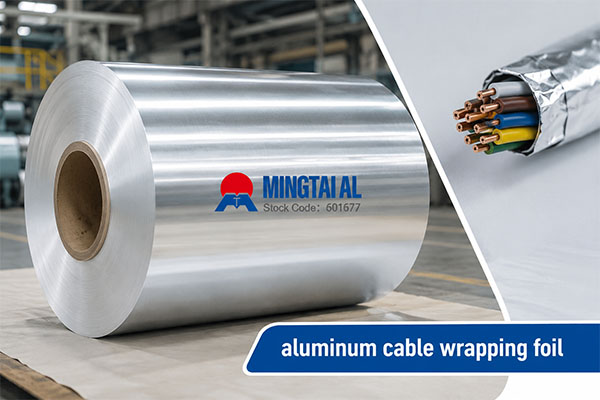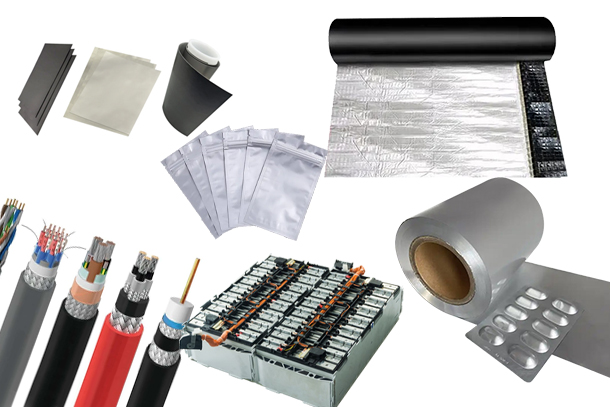
aluminum cable wrapping foil
In power transmission and communication networks, aluminum cable wrapping foil is by no means a minor accessory—it plays a critical role in shielding electromagnetic interference, preventing moisture ingress, and maintaining signal integrity. Choosing the wrong foil can lead to ineffective shielding or even frequent production line stoppages. This article cuts through the technical jargon to help you master every essential selection factor from an engineering perspective.
Three Core Functions
- EMI Shielding – The conductivity of aluminum forms a reflective barrier that blocks external electromagnetic waves and prevents internal signal leakage, particularly effective against low‑frequency interference.
- Moisture and Oxidation Protection – The dense aluminum layer stops water vapor and oxygen from penetrating, significantly slowing aging of the insulation and jacket materials.
- Physical Protection and Tracing – In fiber optic cables, the foil also serves as a tracing layer for link integrity testing—a valuable added benefit.
Five Key Technical Specifications
Alloy and Temper
The two dominant alloys are 1235 (higher purity and better ductility) and 8011 (slightly higher strength). Almost all cable wrapping applications use the soft (O) temper to ensure the foil bends without cracking during wrapping.
Thickness and Width Tolerances
Typical thickness ranges from 0.01 mm (thin shielding tapes) to 0.20 mm (waterproof layers for power cables). Thickness tolerance should be held within ±5% and width tolerance within ±0.5 mm—any looser and you risk poor lap joints and inconsistent shielding.
Mechanical Properties
Tensile strength usually falls between 50 and 110 MPa, but elongation is the real game‑changer. For soft‑temper foil, elongation must be at least 1%; premium products can achieve over 10%. Low elongation leads to tearing under tension, causing annoying downtime.
Pinhole Density and Surface Cleanliness
Pinholes directly compromise shielding continuity. High‑quality foil has no more than 5 pinholes per square meter. Residual oil or stains on the surface reduce adhesion to the cable jacket—always ask for a cleanliness test report.
Surface Wetting Tension (Dyne Level)
If the foil needs to be laminated with PE, PET, or hot‑melt adhesive (e.g., for aluminum‑plastic composite tapes), the wetting tension should be at least 31 mN/m. Lower values result in poor bonding and eventual delamination of the jacket.
Selection Guide by Cable Type
- Medium‑ and Low‑Voltage Power Cables – Mainly used as a waterproof layer and grounding shield. Recommended thickness: 0.15–0.20 mm, with higher tensile strength and good adhesion to hot‑melt jackets.
- Communication Cables (e.g., telephone lines) – Prevent crosstalk and external EMI. Thickness is usually 0.01–0.025 mm, with extremely low pinhole requirements, often laminated longitudinally with PET film.
- Coaxial Cables – For stabilizing characteristic impedance, thickness typically falls between 0.02 and 0.05 mm.
- Fiber Optic Cables – Require both shielding and tracing functions, so pay special attention to surface wetting tension.
Aluminum Foil vs. Copper Foil – How to Choose?
Copper foil offers superior shielding, especially at high frequencies, but it is heavier and more expensive. Aluminum foil is lighter, cheaper, and more flexible, delivering about 60% of the shielding effectiveness of copper for low‑ to medium‑frequency applications—and it provides 100% coverage, which braided shields cannot match. If cost and weight are your primary concerns and your application is low‑to‑medium frequency, aluminum is the clear winner. For demanding high‑frequency environments, consider combining aluminum foil with a braided shield.
Market Trends at a Glance
The global cable foil market is projected to grow at a compound annual growth rate of around 4.4%. Major drivers include 5G network rollouts, renewable energy projects (solar, wind farms), and ongoing infrastructure investment in the Asia‑Pacific region. In the MENA region alone, the aluminum cable foil market was valued at approximately $1.98 billion in 2023 and is expected to reach $6.74 billion by 2034. With such booming demand, securing a reliable supplier is more important than ever.
Purchasing Checklist – 5 Questions to Ask Your Supplier
1. Which alloys (1235/8011) do you supply, and is the O temper consistently available?
2. What are your guaranteed thickness and width tolerances?
3. What is the minimum elongation value, and do you provide third‑party test reports?
4. What are your control standards for pinhole density and residual oil?
5. Can you customize slitting width and coil length?
Final Thoughts
Selecting the right foil involves more than just picking a thickness—it requires careful attention to alloy, tolerances, mechanical properties, and surface quality. By keeping the above points in mind, you can make precise choices that boost both cable performance and production efficiency. And when you need a dependable partner, aluminum cable wrapping foil from an experienced mill ensures consistent quality and tailor‑made solutions.
FAQ
Q1: What is the most common alloy for cable wrapping foil?
A: 1235 and 8011 are the most widely used—1235 offers higher purity and ductility, while 8011 provides greater strength.
Q2: What thickness is typical for cable wrapping foil?
A: It ranges from 0.01 mm for thin shielding tapes to 0.20 mm for waterproof layers in power cables.
Q3: Why choose aluminum foil over copper for shielding?
A: Aluminum is lighter, cheaper, and more flexible, and it achieves full coverage, making it ideal for low‑ to medium‑frequency applications.
Mingtai Aluminum supplies a full range of 1235 and 8011 cable wrapping foils with tight tolerances and stable mechanical properties—reach out to discuss your custom requirements.