5083 marine grade aluminum plate
Seawater is tough on metals. Salt spray, tides, waves, and galvanic corrosion can eat through ordinary steel in just a few years. That’s why shipbuilding and offshore engineering almost always turn to 5083 marine grade aluminum plate as the first line of defense – it’s light, strong, and stands up to the sea.
Why does 5083 resist seawater so well?
5083 belongs to the Al-Mg family (high‑magnesium alloy), with 4.0%–4.9% magnesium. That high magnesium content gives two clear benefits:
- A dense oxide film – a natural magnesium‑aluminum oxide layer forms on the surface, blocking chloride ions. Even if scratched, it self‑repairs in air.
- Chromium and manganese work together – a small amount of chromium (0.05%–0.25%) stops harmful β‑phase (Al₃Mg₂) from forming a continuous network at grain boundaries. Manganese helps spread second‑phase particles evenly. Together, they greatly reduce the risk of intergranular corrosion and exfoliation corrosion.
Test data shows that after 120 days in simulated seawater, pitting depth on 5083 is less than 110 μm – no threat to structural safety.
Mandatory standards: ASTM B928 and classification society approvals
Not every 5083 alloy is suitable for marine use. Ordinary industrial‑grade 5083 does not have mandatory exfoliation corrosion requirements – if used in a hull, it may delaminate within a few years.
ASTM B928 is the dedicated standard for high‑magnesium marine aluminium plates. It requires passing two key tests:
- ASTM G66 (ASSET) – evaluates exfoliation corrosion susceptibility
- ASTM G67 (NAMLT) – evaluates intergranular corrosion susceptibility
On top of that, approvals from major classification societies (CCS, ABS, BV, LR) are also essential. Always check the certificate for the standard number and society logo before buying.
Choose the right temper: H116, H321, H112, or O‑temper?
5083 cannot be heat‑treated for strength – all its strength comes from cold working and stabilisation. Different tempers suit different jobs:
|
Temper |
Yield strength (MPa) |
Best for |
|
H116 |
≥215 |
Hull shell, underwater structures, high‑speed craft – highest corrosion resistance required |
|
H321 |
≥215 |
Same performance as H116, different processing route – common on cargo ship structures |
|
H111 / H112 |
~125 |
Superstructures, bulkheads, non‑load‑bearing parts – good formability |
|
O (annealed) |
~125 |
Deep‑drawn parts, complex curved fuel tanks – maximum elongation |
> Many people ask: which is more corrosion resistant, H116 or H321? Answer: exactly the same. The choice usually depends on owner specifications or stock availability.

Procurement checklist – 4 steps to spot true marine‑grade 5083
This is where the full keyword appears again for the third and final time.
To make sure you are buying genuine 5083 marine grade aluminum plate, follow these four steps:
1. Check the classification society certificate – confirm the CCS/ABS/BV/LR mark is valid and covers your required thickness and temper.
2. Request the MTC (Mill Test Certificate) – verify that magnesium content is between 4.0% and 4.9%. Even a 0.1% deviation can noticeably reduce pitting resistance.
3. Ask for ASSET and NAMLT test reports – these are the core requirements of ASTM B928 and the hard evidence that separates marine‑grade from industrial‑grade.
4. Double‑check thickness tolerance – refer to ASTM B209 or EN 485 standards. Too much deviation will cause welding problems.
5. Typical applications and recommended thickness (reference)
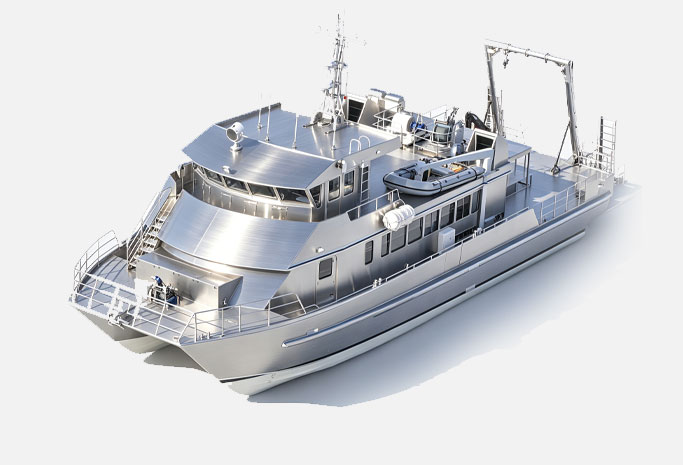
- Hull shell / bottom → H116 or H321, thickness 5–25 mm
- Main deck structures → H116 or H321, thickness 8–30 mm
- Superstructures / bulkheads → H111 or H112, thickness 3–10 mm
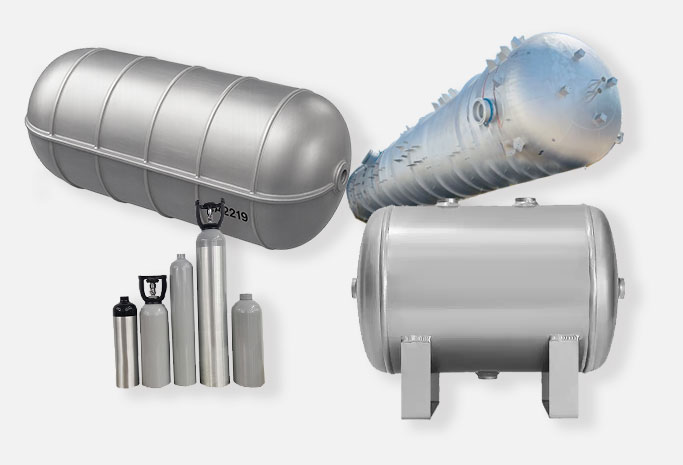
- LNG / fuel tanks → O‑temper or H111, thickness 4–12 mm
- High‑speed passenger craft / patrol boats → H116, thickness 4–12 mm
- Icebreaker hulls → H321, thickness 15–40 mm
With a density of just 2.66 g/cm³, 5083 is about two‑thirds lighter than steel. Less weight means a lower centre of gravity, higher speed, and lower fuel consumption.
How does 5083 compare with 5052 and 5086?
- 5052 – lower magnesium (2.2%–2.8%), strength only about 60% of 5083, salt spray life ~5,000 hours (5083 ~8,000 hours). Good for freshwater boats, interior panels, non‑load parts.
- 5086 – performance in between, strength ~240 MPa, salt spray life ~6,000 hours. A reasonable alternative if 5083 is not available.
One‑sentence summary: hull shells and load‑bearing structures → 5083; non‑structural parts → 5052 saves cost.
Seawater corrosion doesn’t forgive. Choosing the right material means choosing safety. Mingtai Aluminum supplies fully certified 5083 marine plates with CCS/ABS/BV/LR approvals and complete ASSET & NAMLT test reports. Contact us for technical data and a quote.
FAQ (quick answers)
Q1: Which is more corrosion resistant, 5083 H116 or H321?
A: They are exactly the same in seawater.
Q2: What is the maximum service temperature for 5083?
A: Recommended not to exceed 65°C – long‑term overheating may cause sensitisation and intergranular corrosion.
Q3: Does welding reduce corrosion resistance?
A: If you use 5183 or 5356 filler rods correctly, the heat‑affected zone stays comparable to the base metal.
Q4: How can I tell marine‑grade 5083 from industrial‑grade?
A: Check if it meets ASTM B928 and passes ASSET & NAMLT tests.
Q5: Can 5083 be used in fresh water?
A: Yes – fresh water is much less corrosive than seawater, so service life is even longer.
Q6: What is the minimum bend radius for H116 temper?
A: About 2.0 times the plate thickness (2.0t); O‑temper can go smaller.
Q7: Does 5083 get white rust?
A: In long‑term humid conditions, a light white film (thickened oxide) may appear – it does not affect structural strength.