What aluminum coil temper for deep drawing is suitable?
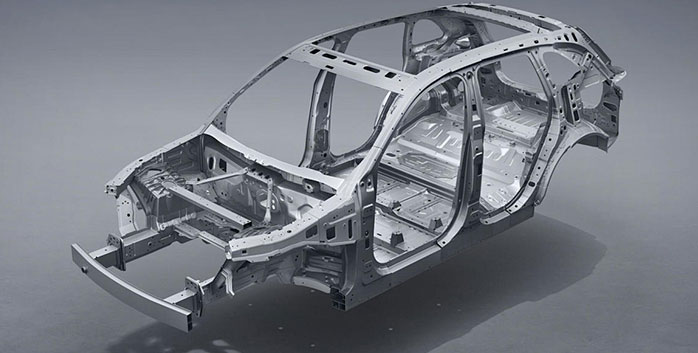
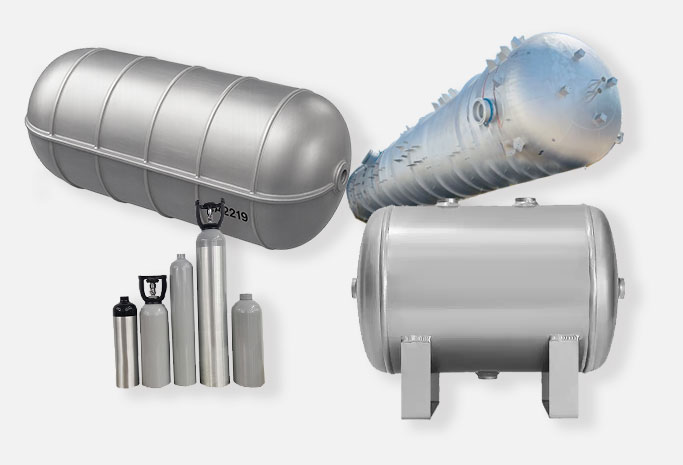
Deep drawing is a common metal forming process used to produce parts like automotive panels, kitchen sinks, battery housings, and cookware. When working with aluminum coils, selecting the right temper is critical. The wrong temper leads to cracking, wrinkling, or excessive springback – all costly problems.
So, what aluminum coil temper for deep drawing is suitable? The answer depends on the part complexity, required strength after forming, and your tooling setup. This article breaks down the main tempers and their deep drawing performance.
Understanding deep drawing with aluminum coil
Deep drawing transforms a flat aluminum blank into a hollow shape (cup, box, or complex curve) using a punch and die. The material must stretch and flow without tearing.
Key requirements for a good deep drawing aluminum coil:
- High elongation – ability to stretch before breaking
- Low yield strength – easy to start the plastic flow
- Uniform grain structure – consistent behavior in all directions
Different tempers offer different balances of strength and formability. Let’s examine the most common ones.
Common aluminum coil tempers and their deep drawing behavior
Aluminum tempers are classified by the basic temper system (O, H, T, etc.). For non-heat-treatable alloys (like 3003, 5052, 1100), the H temper (strain-hardened) and O temper (annealed) are most relevant.
O temper (fully annealed)
- Softest, highest formability
- Excellent deep drawing capability – ideal for complex shapes
- Low strength after forming (may require post-forming strengthening)
- Typical alloys: 1100-O, 3003-O, 5052-O
H12 or H14 temper (¼ hard or ½ hard)
- Moderately strain-hardened
- Decent formability for shallow to moderate deep drawing
- Better final part strength than O temper
- May crack on deep or sharp-cornered draws
H16 or H18 temper (¾ hard to full hard)
- High strength, low elongation
- Not suitable for deep drawing – will likely fracture
- Used for flat or lightly formed parts
T temper (heat-treated, e.g., T6)
- For 6xxx or 7xxx alloys
- Too strong for deep drawing unless in T4 or O condition
- Not recommended for standard deep drawing processes
> Quick comparison table (formability ranking):
O > H12 > H14 > H16 > H18 (O is easiest to form, but we avoid saying “best” – it’s the most formable by nature)
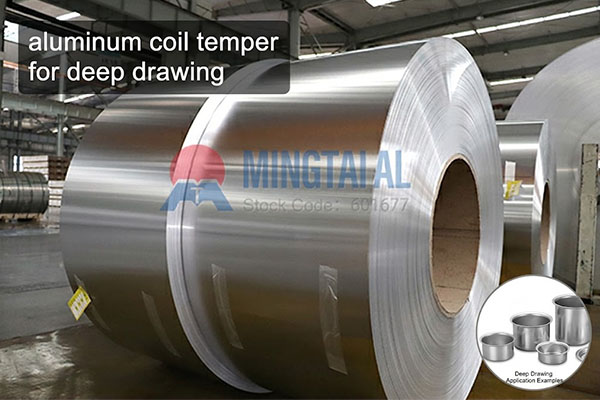
Which temper is actually suitable for deep drawing?
Based on the above, the most suitable aluminum coil temper for deep drawing is O temper when maximum formability is needed – for example:
- Deep cups (height > diameter)
- Sharp corner radii
- Complex multi-stage draws
However, O temper produces a soft finished part. If your application requires higher dent resistance or structural strength after drawing, consider H12 or H14 but with these limitations:
- Use for shallow draws (draw ratio ≤ 2:1)
- Expect some surface roughening or micro-cracking on severe draws
- Lubrication and tooling quality become more critical
Practical recommendation table by part type
|
Part type |
Recommended temper |
Why |
|
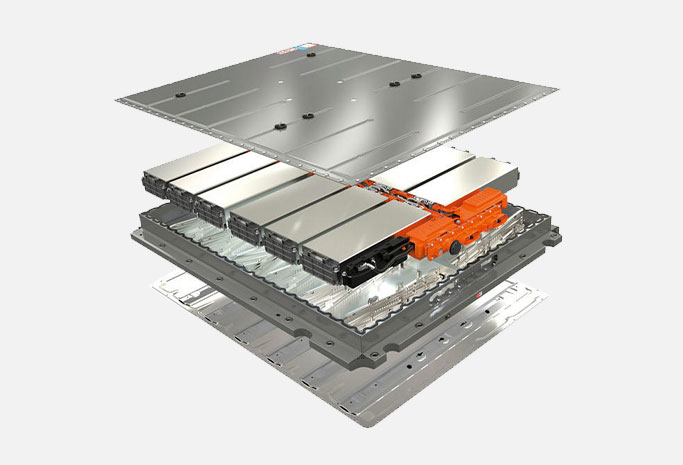
Deep battery enclosure |
3003-O or 5052-O |
Maximum elongation, no cracking |
|
Shallow sink basin |
3003-H12 |
Good strength after forming |
|
Automotive inner panel |
1100-O |
Complex curves need high formability |
|
Cookware bottom |
3003-H14 |
Moderate draw, requires flatness |
> Note: No single temper works for all deep drawing jobs. Always test your specific tooling and part geometry.
Additional factors that affect deep drawing success
Even with the right temper, other variables matter:
- Coil thickness uniformity – variations cause uneven material flow.
- Lubrication – proper film reduces friction and tearing risk.
- Blank holder force – too high = cracking; too low = wrinkling.
- Punch and die radii – sharp edges need softer tempers.
- Alloy choice – 1100 and 3003 are most deep drawable; 5052 is good but stronger.
When sourcing aluminum coils for deep drawing, request mill certificates that specify:
- Temper (exactly O, H12, etc. – no ambiguous codes)
- Elongation percentage (minimum 20% for O temper)
- Surface condition (clean, no oil spots or scratches)
FAQ – Aluminum coil temper for deep drawing
Q: What is the most common temper for deep drawing aluminum?
A: O temper (fully annealed) is the most widely used because it offers the highest elongation and lowest yield strength.
Q: Can H14 aluminum coil be deep drawn?
A: Yes, but only for shallow draws with generous radii; deep or complex shapes will likely crack.
Q: Does thicker coil require a different temper?
A: Thicker material generally needs softer temper (O or H12) because higher strain hardening reduces formability.
Q: How do I know if my temper is wrong?
A: Cracking near the punch nose or wrinkling at the flange indicates insufficient formability – switch to a softer temper.
Q: Is 5052-H32 suitable for deep drawing?
A: No – H32 is strain-hardened and stabilized; use 5052-O instead for deep drawing.
At Mingtai Aluminum, we supply aluminum coils in O, H12, H14, and many other tempers – each backed by strict mill test certificates. Contact our team to discuss your deep drawing application.