5052 h32 vs h34 aluminum sheet
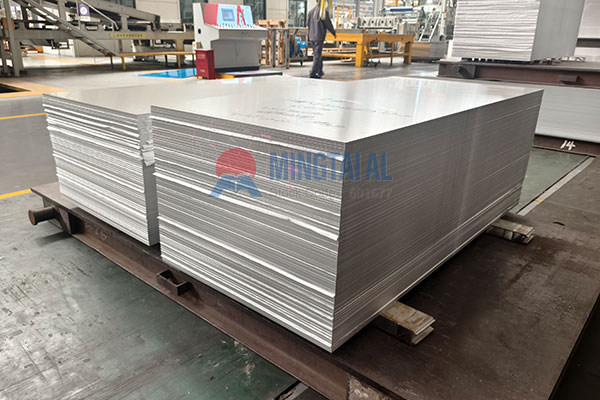
Choosing between 5052 H32 and H34 aluminum sheet often comes down to understanding the trade‑off between strength and formability. Both share the same chemistry but differ in work hardening level—H32 is roughly ¼ hard, while H34 is ½ hard. This difference directly affects strength, bendability, and application fit. Picking the wrong one could lead to insufficient strength or cracking during bending. Here’s a data‑driven comparison to help you decide.
Same Alloy, Different Hardness
5052 aluminum belongs to the Al‑Mg series (magnesium content 2.2%–2.8%) and cannot be strengthened by heat treatment—only through cold working. H32 and H34 have identical chemical composition; the only difference is the amount of cold work:
- H32 – cold worked to approximately ¼ hardness, then stabilized.
- H34 – cold worked to approximately ½ hardness, then stabilized.
In simple terms, it’s a trade‑off: H34 gives higher strength but lower formability, while H32 is easier to form but slightly less strong.
Mechanical Properties at a Glance
|
Property |
5052‑H32 |
5052‑H34 |
|
Tensile Strength |
210–260 MPa |
230–290 MPa |
|
Yield Strength |
≥160 MPa |
≥180 MPa |
|
Elongation |
≥10% |
≥8% |
|
Brinell Hardness |
~60 HB |
~68 HB |
|
Fatigue Strength |
~115–130 MPa |
~125 MPa |
H34 leads in tensile, yield, hardness, and fatigue strength, but its lower elongation means reduced ductility—so it is more prone to cracking during bending.
Bending Performance – The Critical Difference
Understanding the bending behavior of 5052 H32 vs H34 aluminum sheet is where most decisions are made.
For H32:
With higher elongation (≥10%) and a minimum bend radius of about 1.5× material thickness, H32 allows tighter bends without cracking. It is the safer choice for parts that require punching, deep drawing, or frequent 90° bending.
For H34:
Higher strength comes with reduced ductility—minimum bend radius is about 2.0× thickness. The increased strength also causes more springback, so you may need to adjust tooling and process parameters. A larger bend radius is recommended.
> Bending tip for both tempers: Always bend perpendicular to the rolling direction (i.e., along the grain) for better results. We do not offer surface treatment or secondary processing—these data help you evaluate the material’s own formability.
Which Applications Fit Each Temper?
H32 – best for balanced strength and formability (most common):
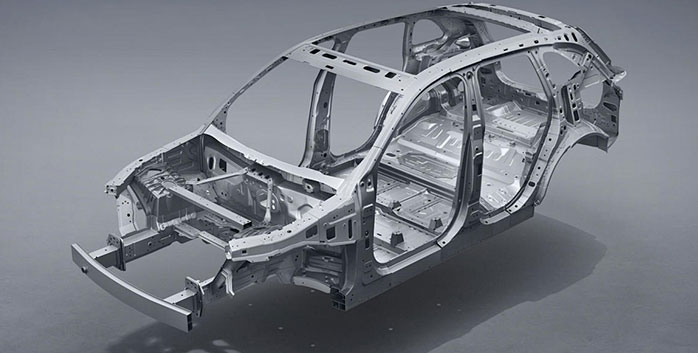
- Automotive body panels, door inner panels
- Battery pack housings and module end plates
- Laptop shells and tablet back covers
- General stamped/bent parts, enclosures, boxes
- Commercial vehicle fuel tanks
H34 – best for higher strength and load‑bearing needs:
- Crash beams, frame cross members
- Smartphone unibody shells, reinforced frames
- Structural parts requiring greater rigidity
- Medium‑strength structural components
A simple rule: If your part involves complex bending or deep forming → choose H32. If it is mainly load‑bearing with few bends and you need higher stiffness → choose H34.
Selection Guide – Quick Reference
|
Your Need |
Recommended Temper |
Reason |
|
Extensive bending, stamping, complex shapes |
H32 |
Higher elongation, smaller bend radius, less cracking risk |
|
Few bends, higher strength and rigidity required |
H34 |
Stronger in tension, yield, and hardness |
|
Need both bending and strength |
H32 |
Best balance between strength and ductility |
|
Thin‑wall structures, lightweight design |
Either – H32 forms easier; H34 may allow thinner gauges |
|
Cost consideration: Raw material prices for H32 and H34 are usually similar. However, H32 may reduce processing costs due to lower scrap rates, while H34 could save material weight by using thinner sections. The total cost depends on your specific fabrication process.
Which Temper Fits Your Application?
There is no absolute “better” choice—H32 is the versatile workhorse that bends easily while still being strong enough for most uses; H34 is the strength‑focused option that demands more care during bending. Evaluate your part’s forming complexity and load requirements, and you’ll find the right match.
Henan Mingtai Aluminum offers a wide range of 5052 aluminum sheet in both tempers, with full specifications and ready stock. Reach out for expert selection advice.
FAQ
Q: Which is easier to bend – H32 or H34?
A: H32 – it has higher elongation and a smaller minimum bend radius (~1.5t vs 2.0t).
Q: How much stronger is H34 than H32?
A: H34 offers about 20–30 MPa higher tensile strength and about 20 MPa higher yield strength.
Q: Which temper is better for battery pack housings?
A: H32 is generally preferred for its balance of strength, formability, and corrosion resistance.
Q: What should I watch out for when bending H34?
A: Use a larger bend radius, compensate for springback, and bend along the grain direction.
Q: Do H32 and H34 cost the same?
A: Raw material prices are close; cost differences usually come from the fabrication stage.