3004 honeycomb aluminum foil
A honeycomb sandwich panel is only as good as the bond between its skin and its core. 3004 honeycomb aluminum foil is a core material that helps hold the cell structure open, resist moisture and salt, and stay bonded to the facing skin. It is an aluminum-manganese-magnesium alloy, and it is often chosen when a panel must remain flat and stable in outdoor, transport, or high-humidity conditions.
What a Honeycomb Core Actually Does
Aluminum honeycomb core starts as layers of thin foil. The foil is printed with adhesive at controlled intervals, stacked, pressed, and cured. Then it is pulled open into a regular hexagonal cell pattern. The result is a sandwich core that adds stiffness without adding much weight.
The foil is the skeleton. The adhesive nodes are the joints. If either one fails, the core can crush, delaminate, or lose flatness. That is why foil grade, temper, surface condition, and adhesive compatibility all matter.
Why Is 3004 Foil Often Chosen for Honeycomb Core?
3004 foil is chosen because its magnesium addition raises strength and corrosion resistance while helping the foil stay stable during expansion and bonding.
3004 is an aluminum-manganese-magnesium alloy. It is not strengthened by heat treatment. Its strength comes from work hardening, which makes H18 and H19 tempers common for honeycomb foil. The magnesium addition is the key difference from 3003.
Magnesium Makes the Difference
Magnesium raises strength while helping the foil resist corrosion. It also supports the foil’s ability to be stretched into a stable cell structure. After the foil is cleaned and prepared, it bonds well with structural adhesives. That reduces the risk of node failure, delamination, and cell collapse.
Bonding Starts at the Surface
A clean surface is essential. Residual oil, dust, or oxide inconsistency can weaken the adhesive bond. For honeycomb core, the foil must be free from holes, bright lines, dark streaks, wrinkles, and other surface defects. Good slitting and winding also matter. A flat, even foil helps the adhesive print evenly and keeps cell size consistent after expansion.
3003 vs 3004 Foil for Honeycomb Core
Both alloys are used in aluminum honeycomb, but they are not interchangeable in every project.
|
Feature |
3003 Foil |
3004 Foil |
|
Main chemistry |
Al-Mn |
Al-Mg-Mn |
|
Corrosion resistance |
Good |
Better in humid, salt, and stress-corrosion conditions |
|
Strength |
Moderate |
Higher |
|
Forming |
Easier to form |
Slightly more demanding |
|
Typical use |
Indoor panels, furniture, general decorative cores |
Outdoor facades, rail, heavy-duty, high-humidity cores |
3003 remains a balanced general-purpose choice. 3004 is often selected when the panel will face outdoor weather, moisture, salt exposure, vibration, or higher structural demands.
What Should a Honeycomb Core Foil Deliver?
It must deliver consistent alloy, temper, thickness, surface cleanliness, flat winding, and stable mechanical properties.
Not every aluminum foil is suitable for honeycomb production. The core maker needs consistency from the first meter to the last.
1. Correct alloy and temper. 3003 and 3004 are common, with H18 or H19 providing the strength needed to keep cells open after expansion.
2. Controlled thickness. Foil thickness should stay within tolerance so every cell carries load evenly.
3. Clean surface. Oil, dirt, and defects can weaken the adhesive bond and cause delamination.
4. Flat winding. Waviness or loose winding can distort adhesive printing and cell shape.
5. Stable mechanical properties. Tensile and yield strength should be consistent across the coil to avoid tearing or collapsed cells.
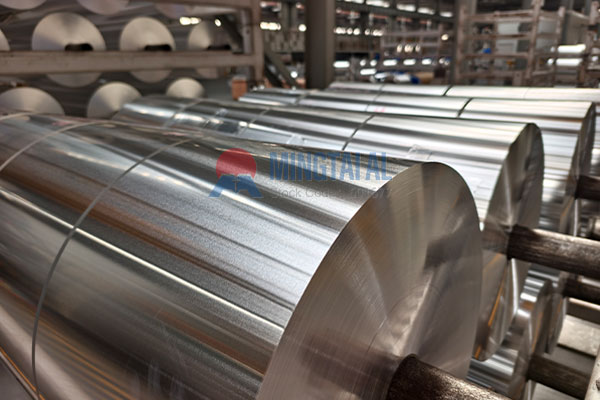
Henan Mingtai supplies 3004 honeycomb aluminum foil with controlled temper and surface quality for this kind of production.
Performance Benefits of Aluminum Honeycomb
The hexagonal core creates a stiff, lightweight sandwich. It is used because it solves several problems at once.
- Lightweight stiffness: The open cell structure adds rigidity without the weight of solid metal.
- Flatness: Large panels resist bowing and oil-canning when the core is uniform and well bonded.
- Thermal and acoustic control: The closed cells reduce heat transfer and help damp sound.
- Fire performance: Aluminum does not burn, and honeycomb panels can meet demanding fire standards.
- Corrosion resistance: Aluminum surfaces resist rust and moisture better than many traditional core materials.
- Recyclability: All-aluminum panels can be recovered and recycled.
Where Is 3004 Foil Honeycomb Core Used?
It is used in outdoor facades, rail interiors, energy storage cabinets, marine cabins, and high-end furniture where flatness and moisture resistance matter.
Building and Architecture
Outdoor facades, canopies, ceiling panels, and large interior partitions use aluminum honeycomb for flatness and weather resistance. In coastal or humid locations, 3004 foil is often preferred over 3003.
Rail and Transport
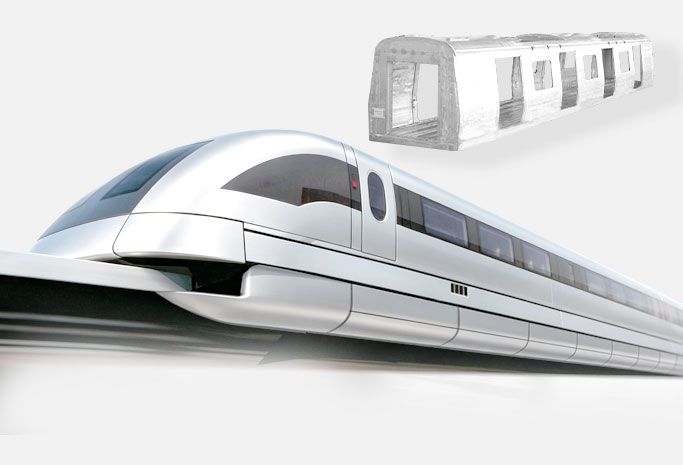
Train interiors, floor panels, partition walls, and marine cabin components benefit from the light weight and fire performance of aluminum honeycomb. The core helps reduce vehicle weight while maintaining panel stiffness.
New Energy Equipment
Energy storage cabinets, battery protection panels, and equipment enclosures use honeycomb cores for impact absorption and lightweight structure. The core can be combined with a strong facing skin to meet safety and durability needs.
High-End Equipment and Furniture
Elevator car panels, medical partitions, and all-aluminum furniture use honeycomb cores because they stay flat in humid spaces and do not swell or warp like wood-based cores.
How Do You Match Foil to the Facing Skin?
Match the core and skin as one system, because adhesive, surface treatment, and curing must work with both materials.
A strong facing skin can provide structural strength, while 3004 foil keeps the core light and stable. The adhesive, surface treatment, and curing process must be matched to both materials. If the skin is thick and stiff, the core still needs uniform cell support to prevent local crushing. If the panel will be machined, coated, or bent, the foil temper and bond quality become even more important. For projects pairing a facing skin with 3004 honeycomb aluminum foil, Henan Mingtai can match foil specifications to the panel design.
Getting the Foil Right for the Panel
The right foil keeps the core open, the bond strong, and the panel flat. For outdoor, transport, and high-humidity applications, 3004 honeycomb aluminum foil is a dependable choice. Henan Mingtai Aluminum supplies aluminum foil for honeycomb and structural panel projects with stable quality and export support. Share your panel design and working conditions, and we will help match the right material.
FAQ
Q: Is 3004 foil good for honeycomb core?
A: Yes, it offers strength, corrosion resistance, and stable bonding.
Q: What temper is used for honeycomb foil?
A: H18 and H19 are common for core production.
Q: Can 3003 be used instead of 3004?
A: Yes, for indoor and general panels, but 3004 is better outdoors.
Q: Why does honeycomb foil need a clean surface?
A: Clean foil bonds better and reduces delamination.
Q: Can 3004 foil be used with aluminum facing skins?
A: Yes, it can be paired with aluminum plate or sheet for strong sandwich panels.
Q: Is aluminum honeycomb recyclable?
A: Yes, all-aluminum panels can be recycled.