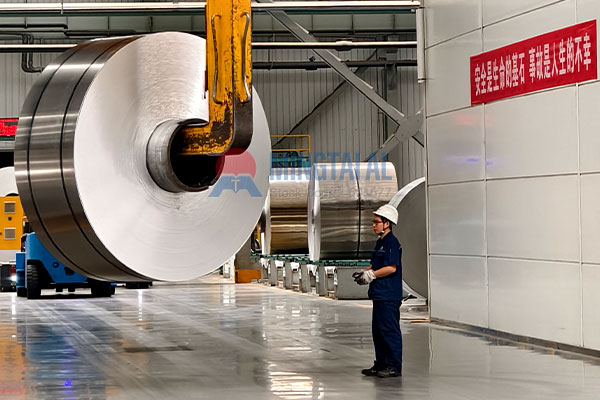
3003 vs 3004 aluminum coil
Choosing between 3003 and 3004 aluminum coil can be tricky. Both are popular 3000-series alloys, both offer good corrosion resistance and weldability, and both look similar on paper. But the differences matter — especially when your application demands specific strength, formability, or cost efficiency.
This guide breaks down the key distinctions so you can make the right call for your project.
What Makes 3003 and 3004 Different?
The difference starts with chemistry. 3003 is an Al-Mn (aluminum-manganese) alloy, with manganese content typically between 1.0% and 1.5%. 3004 builds on that foundation by adding roughly 1% magnesium. That extra magnesium is what gives 3004 its edge.
Both alloys are non-heat-treatable — they gain strength through cold working (tempers like H14, H24, H32, H34), not through heat treatment. And here’s an important point: 3003 and 3004 share about 99% of their average alloy composition. That’s why they’re often confused. But that 1% difference — the magnesium — changes the game.
Performance at a Glance
Because 3004 contains magnesium, it delivers higher strength than 3003. In practical terms:
- 3003 offers moderate strength with excellent formability. In H14 temper, tensile strength typically reaches around 152 MPa. It’s stronger than 1000-series pure aluminum but remains easy to work with.
- 3004 steps up the strength significantly. Depending on temper, tensile strength can range from roughly 150 MPa up to 285 MPa. O-temper 3004 delivers around 179 MPa ultimate tensile strength, while H34 tempers can reach 240 MPa or higher.
Both alloys offer very good corrosion resistance, excellent weldability, and good formability. But 3004’s deep-drawing characteristics are particularly outstanding, making it the go-to choice for applications that require complex forming.
Where Does Each Alloy Excel?
3003 Aluminum Coil is the workhorse. It’s widely used where medium strength is sufficient and cost matters.
Common 3003 applications include:
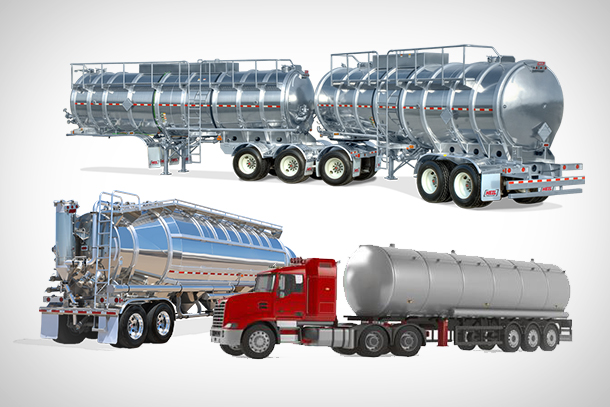
- Food and chemical handling equipment, tanks, and pressure vessels
- Roofing and siding, corrugated sheets, and building trim
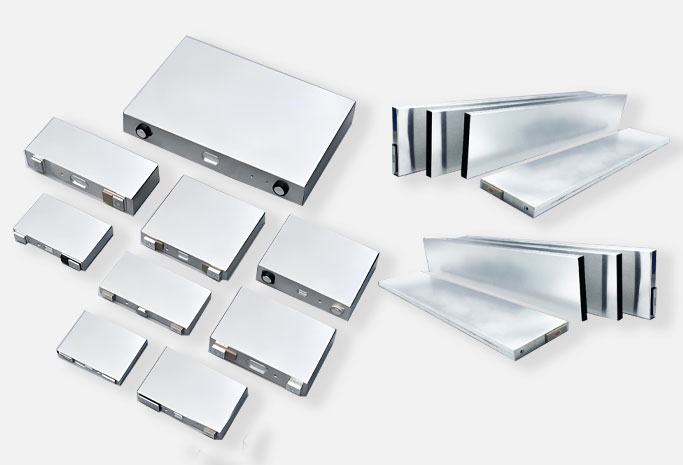
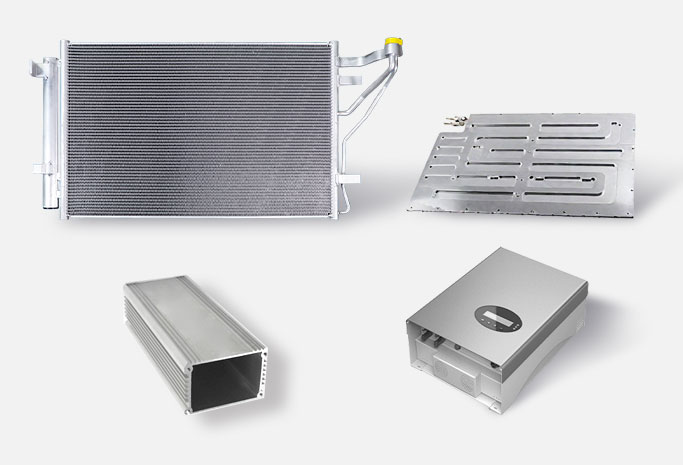
- Heat exchangers, radiator fins, and automotive battery enclosures
- Cookware and kitchen equipment
- Pre-painted coil substrates and pipe insulation
3004 Aluminum Coil is the upgrade — stronger and better for deep drawing.
Typical 3004 uses include:
- Beverage can bodies and rigid containers (drawn and ironed)
- Chemical production and storage devices requiring higher strength
- Roofing, curtain wall panels, and building products
- Automotive components and general fabrication
- Lamp bases, electrical enclosures, and furniture
In short: if your project involves deep drawing, heavy forming, or load-bearing requirements, 3004 is worth the consideration. If you need general-purpose fabrication with good formability and lower cost, 3003 gets the job done.
The Cost Factor
Higher performance comes with a higher price tag. Because 3004 contains magnesium and offers superior mechanical properties, it typically costs more than 3003. Market prices for 3003 aluminum coil generally fall in the range of $2,200–$2,600 per ton, while 3004 ranges from $2,350–$2,700 per ton.
The exact price depends on temper, thickness, width, order volume, and current market conditions. But the general rule holds: 3004 commands a premium. The question is whether your application justifies that extra cost.
How to Choose: A Decision Framework
Ask yourself these three questions:
1. What strength does my application require? — If you need higher structural integrity or pressure resistance, lean toward 3004. If moderate strength is enough, 3003 is the economical choice.
2. How complex is the forming process? — Deep drawing, ironing, or complicated stamping? 3004’s deep-drawing properties make it superior. For simpler bending, cutting, or basic forming, 3003 performs well.
3. What’s my budget? — If cost is a primary constraint and performance requirements are moderate, 3003 offers the best value among 3000-series alloys.
Here’s a quick reference:
|
Your Application |
Recommended Alloy |
|
Battery enclosures / heat exchangers |
3003 |
|
Beverage cans / deep-drawn containers |
3004 |
|
Roofing / siding / general building |
3003 (or 3004 for high-wind areas) |
|
Chemical tanks / pressure vessels |
3003 (general) / 3004 (high-pressure) |
|
Pre-painted coil substrates |
Both, depending on strength needs |
FAQ
Q: Which is stronger, 3003 or 3004 aluminum?
A: 3004 is stronger than 3003 due to the addition of magnesium.
Q: Can 3003 and 3004 be welded?
A: Yes, both offer excellent weldability using conventional methods.
Q: Which alloy is better for roofing applications?
A: 3003 works for most roofing, but 3004 is preferred for high-wind areas or heavy-load requirements.
Q: Is 3004 always more expensive than 3003?
A: Yes, 3004 typically commands a higher price due to its enhanced mechanical properties.
Q: Do 3003 and 3004 require heat treatment?
A: No, both are non-heat-treatable alloys — strength is achieved through cold working.
*Henan Mingtai Aluminum offers reliable supply of both 3003 and 3004 aluminum coils with stable quality. Contact us for specifications and current pricing.*