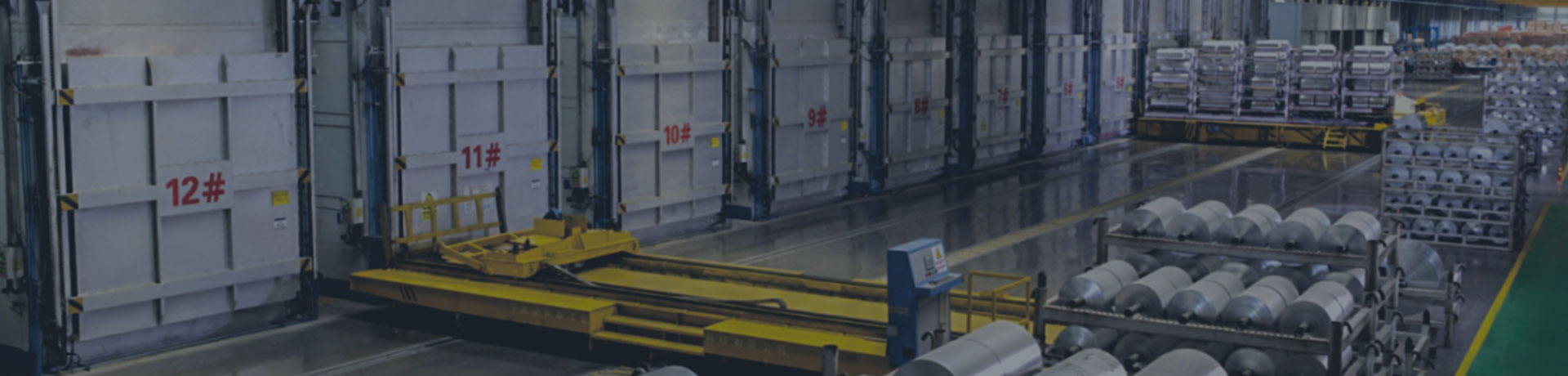
3003 h14 aluminum coil
Introduction
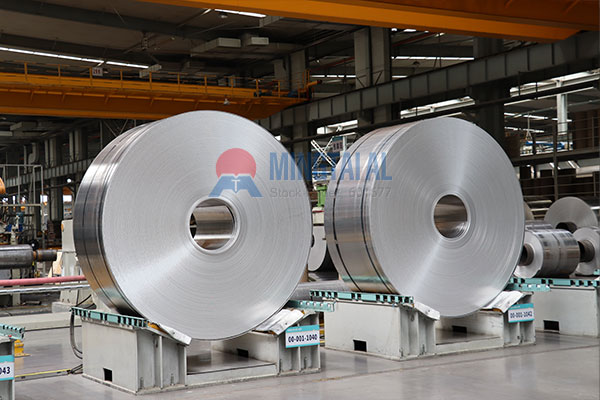
The 3003 H14 aluminum coil is one of the most widely used grades in the 3xxx series, with manganese (Mn 1.0–1.5%) as its primary alloying element. Compared to commercially pure aluminum 1100, 3003 offers about 20% higher strength. The H14 temper – achieved by cold working to a half-hard state – delivers a practical balance between strength and formability. For sheet metal fabrication, stamping, and container manufacturing, this coil is a ready‑to‑use choice that requires no post‑forming heat treatment.
Mechanical Properties at a Glance
|
Property |
Typical Value |
|
Ultimate Tensile Strength |
152 MPa |
|
Yield Strength (0.2% proof) |
145 MPa |
|
Elongation (for 1.6 mm thickness) |
8–16% |
|
Brinell Hardness |
40 HB |
|
Density |
2.73 g/cm³ |
With a yield strength of 145 MPa, this material can withstand moderate stresses and loads. Its elongation around 8% (or higher for thinner gauges) is sufficient for most stamping, bending, and shallow drawing operations. The 3003 alloy itself is known for excellent formability, including deep drawing and spinning, which are well accommodated even in the H14 temper.
Why H14 Temper – The Balance Point
A common question is how H14 compares with other tempers. The table below summarises the trade‑offs:
|
Temper |
Strength |
Formability |
Typical Use |
|
O (annealed) |
Lowest |
Best |
Deep drawing, complex shapes |
|
H12 |
Lower |
Very good |
Moderate bending, roll forming |
|
H14 (half‑hard) |
Moderate |
Good |
General stamping, structural parts |
|
H18 (full‑hard) |
Highest |
Limited |
Rigid load‑bearing components |
In short: O is too soft, H18 is too hard, and H14 sits right in the middle.
For most industrial applications – where components need enough structural integrity to withstand service loads, yet must be shaped by bending or stamping – H14 provides the most cost‑effective solution. It eliminates the need for additional hardening after forming, and it avoids the cracking risks associated with full‑hard tempers.
Typical Application Fields
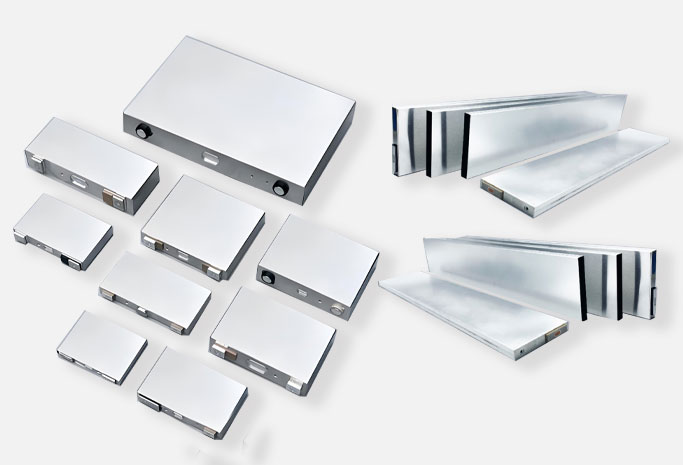
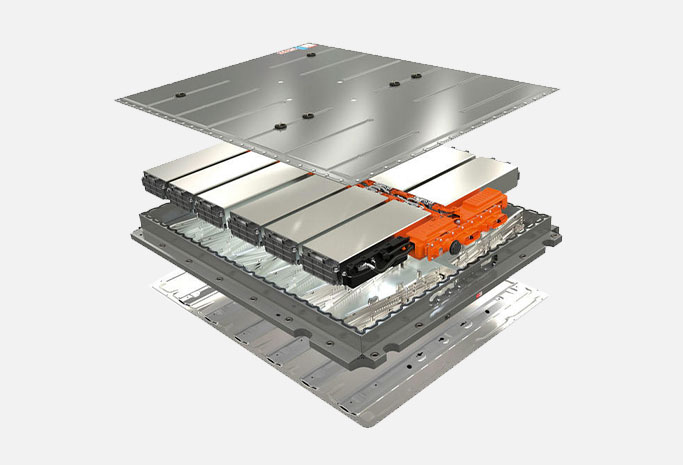
- New energy vehicle battery housings – one of the fastest‑growing uses. The H14 temper offers the strength to resist external impacts and prevent deformation, while its formability enables shell shaping through stamping and drawing. The low density of 3003 aluminium also helps reduce overall battery pack weight.
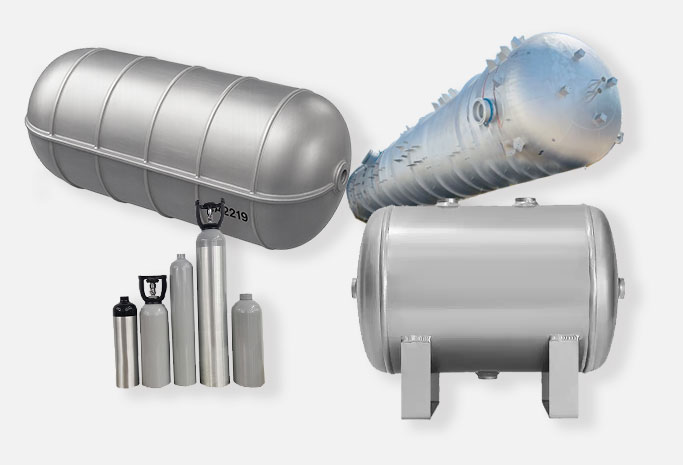
- Food and chemical equipment – widely used in storage tanks, pressure vessels, and piping for food and chemical processing. Its excellent corrosion resistance performs well in humid or aggressive environments, and its good weldability simplifies assembly and sealing.
- Building and architectural finishes – exterior wall panels, curtain walls, decorative trim, and roofing sheets benefit from the combination of moderate strength, formability, and weather resistance for long‑term outdoor service.
- HVAC and heat exchange systems – the alloy’s good thermal conductivity makes it suitable for fin stock, air‑conditioner evaporators, and ventilation ducts where thermal management is critical.
Fabrication Considerations
- Bending and folding – 3003 H14 can be cold‑bent to 90°. For 0.064‑inch (approx. 1.6 mm) thickness, the minimum bend radius can be as low as zero. However, bending performance is not as flexible as O or H12 tempers; for tight radii, a slightly larger bend radius or pre‑heating may be advisable.
- Stamping and drawing – the hardness is moderate, providing both rigidity and ductility. It works well for general blanking, bending, shallow drawing, and flanging. For deep‑drawing operations, the O temper should be considered instead.
- Welding – this alloy exhibits excellent weldability and can be joined using MIG, TIG, resistance welding, and other standard methods. Welded joints maintain stable mechanical properties.
*The product is supplied in its original mill‑finished coil form; surface treatment or secondary processing is not included.*
Key Points for Material Selection
When evaluating 3003 H14 aluminum coil for a project, the following aspects deserve attention:
- Thickness, width, coil ID/OD – verify that all dimensions match production line requirements.
- Material test certificates (MTC) – ensure the supplier provides full mill test reports.
- Supply flexibility – confirm whether the supplier supports custom specifications and maintains stock inventory.
A Practical Choice for Balanced Performance
The widespread use of 3003 H14 aluminium coil across industries stems from one fundamental reason: it achieves a highly practical balance between strength and formability. For any project that demands structural reliability, efficient processing, and cost control, this grade warrants serious evaluation.
For high‑quality 3003 H14 aluminium coil, Henan Mingtai Aluminum offers full‑specification customisation with mill test certificates and direct factory supply.
FAQ
Q: What is the main difference between 3003 H14 and 3003 O temper?
A: 3003 O is annealed for maximum formability but lowest strength, while 3003 H14 is half‑hard with higher strength and slightly reduced formability.
Q: Is 3003 H14 suitable for deep drawing?
A: It works well for shallow drawing and general stamping; for deep drawing, the O temper is recommended.
Q: Can 3003 H14 aluminium coil be welded?
A: Yes, it has excellent weldability and can be welded by MIG, TIG, resistance, and other standard methods.