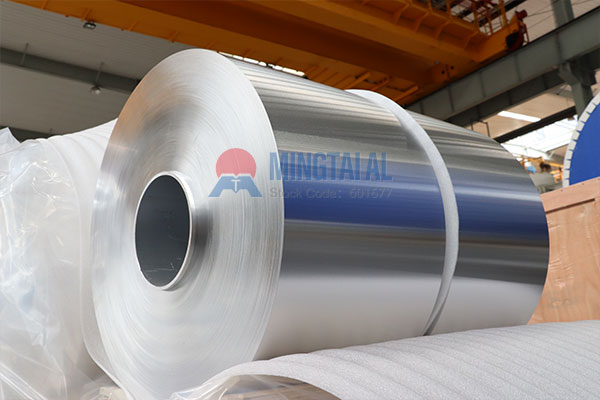
1060 o aluminum foil
Why This Material Deserves Attention
In transformer manufacturing, new energy battery production, and RFID antenna fabrication, material selection directly determines product performance and cost. 1060 O aluminum foil has been gaining noticeable traction among engineers—not as a generic commodity foil, but as a high-purity, fully annealed soft foil with one core mission: conducting electricity efficiently.
What Exactly Is This Foil?
Start with the composition.
This is a 1-series industrial pure aluminum product. The aluminum content is minimum 99.6%. Impurities like silicon and iron are tightly capped—silicon at 0.25%, iron at 0.35%. The math is simple: fewer impurities means less electron scattering, and that directly translates to stronger conductivity.
Now the temper.
The letter "O" stands for fully annealed soft temper. What does that mean in practice? Unlike hard-temp variants such as H18, this foil goes through a full annealing process that restores the grain structure. The result is a material that is:
- Soft and highly ductile
- Easy to wind, bend, and deep draw
- Far less prone to cracking during forming
So the foil delivers on two fronts at once—electrical performance and workability. Both come from the same underlying feature: a clean, stress-relieved microstructure.
Conductivity Performance: The Real Numbers
The conductivity of this material stabilizes at 61% to 62% IACS (International Annealed Copper Standard). At 20°C, the electrical resistivity does not exceed 0.02825 Ω·mm²/m. Thermal conductivity falls in the range of approximately 230–237 W/(m·K).
Two factors explain why this level is achievable:
- The 99.6%+ purity minimizes electron obstruction caused by impurities
- The fully annealed state eliminates lattice distortion from cold working, creating a smoother path for electron flow
Among common metals, this alloy ranks just below silver, copper, and gold in conductivity, and significantly outperforms nickel, iron, and steel.
How Does It Compare to Copper?
This is the question that comes up most frequently during material selection. The table below provides a direct comparison:
|
Comparison Factor |
1060 O Aluminum |
Copper |
|
Volume Conductivity |
61–62% IACS |
100% IACS |
|
Weight Conductivity |
~210% IACS |
100% IACS |
|
Density |
2.70 g/cm³ |
8.89 g/cm³ |
|
Weight per Unit Length |
~1/3 of copper |
Baseline |
|
Material Cost |
30–40% of copper |
Baseline |
The takeaway is straightforward. Replacing copper with the same cross-sectional area of aluminum will result in higher resistance—so the cross-section needs to be increased accordingly. However, even after that adjustment, the weight remains roughly one-third that of copper. In other words, for the same weight, this aluminum foil delivers about twice the conductivity of copper. For weight-sensitive applications like electric vehicles and aerospace components, this advantage is substantial.
Typical Application Scenarios
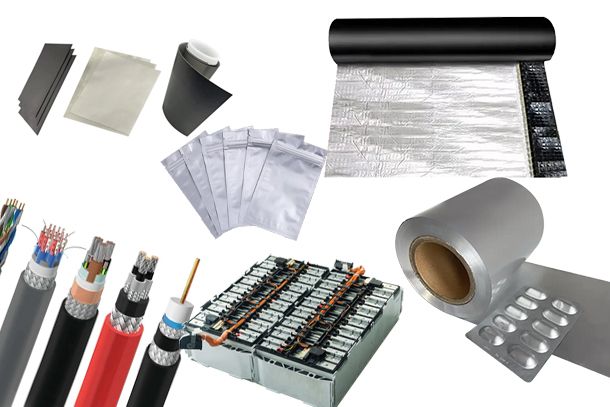
This material plays a critical role across multiple electrical manufacturing sectors.
- Transformer Windings: Commonly used in dry-type transformer windings, available in thicknesses from 0.08mm to 3.00mm with customizable widths. Foil-type windings exhibit better skin effect performance at high frequencies compared to round wire, resulting in lower eddy current losses.
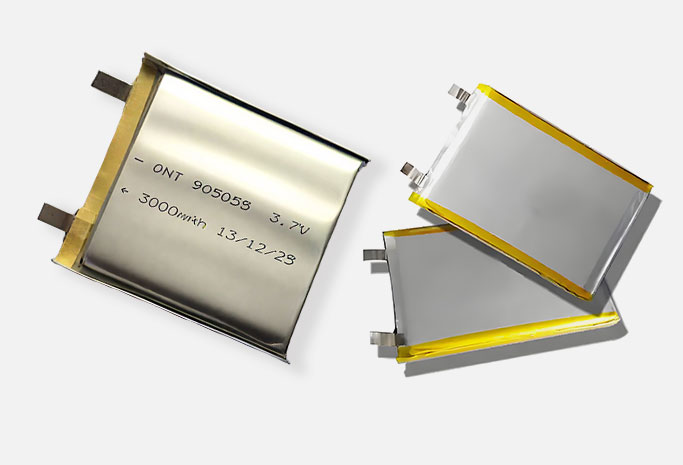
- New Energy Batteries: Foil in the 0.1–0.3mm range serves as current collectors for power batteries. Compared to copper, it reduces weight by roughly 40%, while the soft temper helps absorb vibration and maintain connection reliability.
- RFID Tags: Ultra-thin gauges (starting at 0.016mm) are used for etched antennas, offering consistent conductivity and good ductility for precision processing.
- Additional applications include capacitor electrodes, reactor windings, and conductive connectors in electrical equipment.
Key Specifications to Evaluate
Beyond confirming adequate conductivity, several other parameters directly affect performance in real use:
- Thickness tolerance: precision grades can hold ±0.005mm
- Elongation: minimum 20% for thickness 0.08–0.20mm, and minimum 25% for 0.20–3.00mm
- Burr height: typically controlled within 0.01–0.03mm
- Surface quality: smooth, scratch-free, with clean edges and no burrs
Each coil should be accompanied by a conductivity test report. Relying solely on the alloy designation carries risk.
A Note on Processing
We focus on supplying high-quality 1060 O foil in its as-rolled condition. We do not perform surface coating, anodizing, laminating, or any secondary processing beyond slitting. This means the material is delivered in its original mill finish, allowing freedom to arrange subsequent treatments according to specific project requirements.
A Practical Material for Real-World Applications
With its 99.6%+ purity, 61–62% IACS conductivity, and density just one-third that of copper, this foil offers a compelling combination of electrical performance, lightweight construction, and cost efficiency. For projects that must balance all three factors, it deserves serious consideration.
*Mingtai Aluminum supplies high-purity 1060 O foil with a conductivity test certificate provided for every coil—ensuring consistent and reliable performance.*
FAQ
Q: What is the exact conductivity of 1060 O aluminum foil?
A: It delivers 61–62% IACS with resistivity ≤0.02825 Ω·mm²/m at 20°C.
Q: Can this foil directly replace copper?
A: Not with the same cross-section—the area must be increased to compensate, but weight remains far lower.
Q: What does the "O" temper mean in practical terms?
A: It means the foil is soft and ductile, making it easy to wind, bend, and form without cracking.
Q: What thicknesses are commonly available?
A: Thickness ranges from 0.08mm to 3.00mm, with custom widths up to 1500mm.
Q: What are the primary end uses?
A: Transformer windings, battery current collectors, RFID antennas, capacitor electrodes, and reactors.