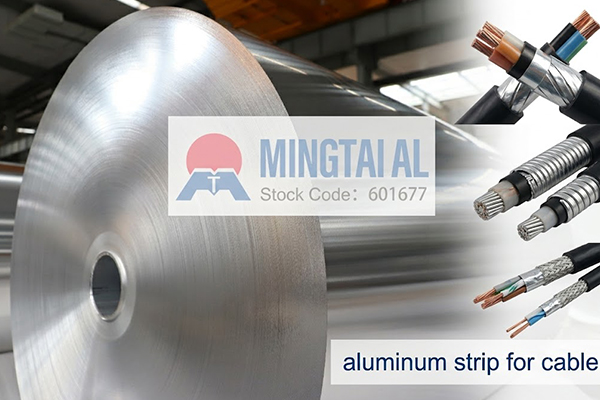
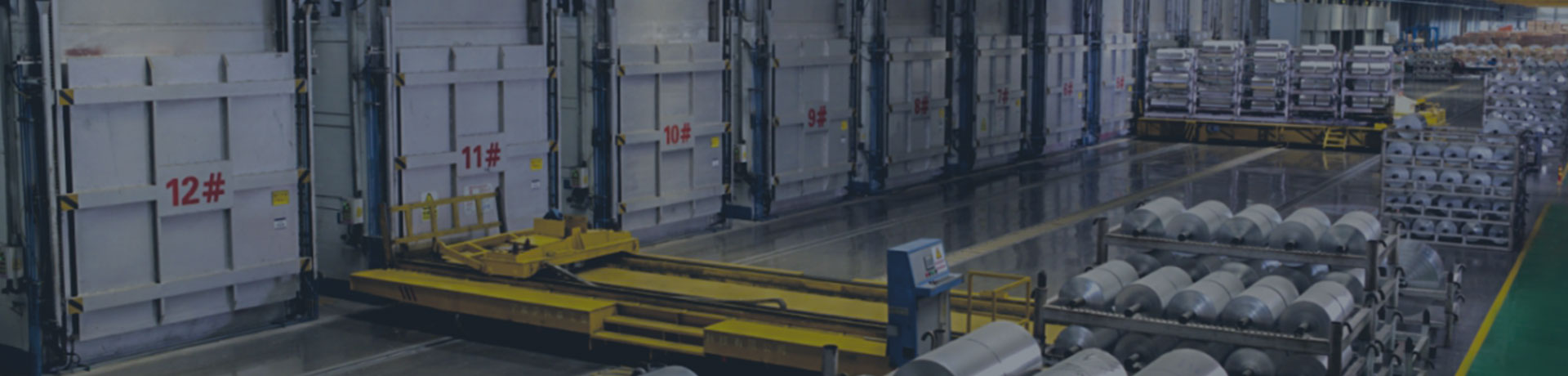
aluminum strip for cable
Aluminum strip for cable is a critical material in the cable manufacturing industry, widely used in power cables, communication cables, and optical fiber cables. Whether serving as an armoring layer for mechanical protection, a shielding layer against electromagnetic interference, or a moisture barrier, aluminum strip plays an irreplaceable role. Choosing the right aluminum strip directly affects production efficiency, product quality, and cost control. This article covers five key aspects—functions, advantages, alloy grades, technical parameters, and procurement considerations—to help you make informed decisions.
What Roles Does Aluminum Strip Play in Cables?
Aluminum strip typically performs one or more of the following functions in cable construction:
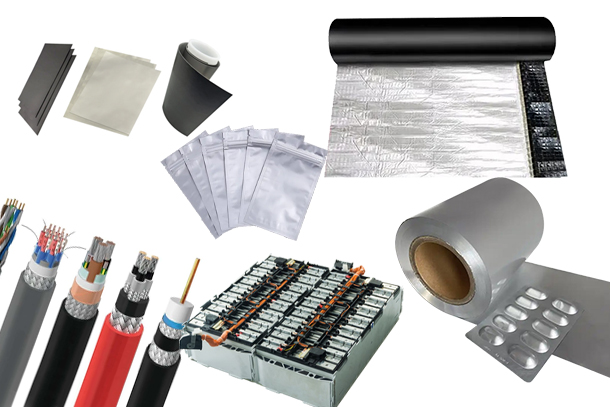
- Mechanical protection (armoring) – Wrapped spirally or longitudinally around the cable core, it prevents damage from external forces during installation and use.
- Electromagnetic shielding – Its good electrical conductivity reduces external signal interference, ensuring stable transmission quality in communication and signal cables.
- Moisture barrier – When combined with a laminated film, it forms an effective barrier against water ingress, especially important for underground and outdoor installations.
- Structural support and grounding – It provides structural integrity to armored cables and can also serve as a grounding path.
Why Choose Aluminum Strip for Cable Manufacturing?
Compared with traditional materials like steel strip or copper tape, aluminum strip offers several distinct advantages:
- Lightweight – The low density of aluminum significantly reduces overall cable weight, lowering transportation costs and easing installation.
- Corrosion resistance – Aluminum naturally forms a dense oxide film, giving it excellent resistance to moisture and corrosive environments, including marine and industrial settings.
- Cost efficiency – Aluminum strip delivers a favourable balance between performance and material cost, making it an economical choice without compromising quality.
- Good formability – It bends and forms easily, making it suitable for high‑speed continuous production lines.
- Non‑magnetic – With no magnetic properties, it eliminates hysteresis losses and is ideal for cables used in electromagnetic‑sensitive applications.-
Which Alloy Grades and Tempers Should You Choose?
Different cable designs require different mechanical and electrical properties, so selecting the correct alloy and temper is essential.
Commonly used alloy grades:
|
Alloy |
Characteristics |
Typical Applications |
|
1060 |
High purity (99.6%), excellent formability |
General low‑voltage cable armouring and wrapping |
|
1100 |
Commercially pure, stable corrosion resistance |
General‑purpose cable sheathing |
|
3003 |
Al‑Mn alloy, higher strength than 1060 |
Cables requiring moderate mechanical strength |
|
5052 |
Al‑Mg alloy, high strength and superior corrosion resistance |
Marine, underground, and harsh‑environment cables |
Temper selection:
- O temper (soft) – Fully annealed, highly ductile and easy to form; ideal for deep‑drawing or complex shaping.
- H temper (hard) – Work‑hardened for increased strength; suitable for armouring layers that demand robust mechanical protection. The number after H (e.g., H24) indicates the degree of hardening.
What Are the Key Technical Parameters?
When specifying aluminum strip, the following parameters must be clearly defined:
|
Parameter |
Common Range |
Remarks |
|
Thickness |
0.2 mm – 3.0 mm |
Thinner for shielding, thicker for armouring |
|
Width |
9.5 mm – 1250 mm |
Depends on cable diameter and production equipment |
|
Thickness tolerance |
±0.01 mm – ±0.03 mm |
Tighter tolerances improve winding accuracy |
|
Width tolerance |
±0.08 mm – ±0.20 mm |
Affects wrapping quality and productivity |
|
Coil inner diameter |
150 mm – 508 mm |
Must match the unwinding equipment on your production line |
|
Electrical conductivity |
≥30% IACS |
Ensures adequate electrical performance |
Matching thickness, width, tolerances, and coil specifications to your production equipment is critical—any mismatch can cause line stoppages or product defects.
Four Essential Considerations When Sourcing Aluminum Strip
- Define your application clearly – Determine whether the strip is for armouring, shielding, or moisture protection, as each function demands different thickness, hardness, and alloy.
- Verify equipment compatibility – Ensure that width and coil inner diameter are compatible with your unwinding and forming machinery.
- Pay close attention to tolerances – Precision in thickness and width directly affects winding accuracy and product consistency; a supplier’s cutting capability is a key quality indicator.
- Inspect surface quality – The surface should be smooth and free from corrosion, cracks, scratches, or oil contamination. Surface defects can impair wrapping and accelerate tool wear.
From material selection to production, aluminum strip is integral to cable quality. Understanding its functions, choosing the right grade and temper, specifying correct parameters, and paying attention to sourcing details—each step determines the final performance of your cables.
When it comes to aluminum strip for cable, Henan Mingtai Al offers a wide range of alloys including 1060, 1100, 3003, and 5052, with customisable thickness and width to meet your specific requirements. Feel free to inquire about your exact specifications.
FAQ
Q: Which alloy is most common for cable armouring?
A: 1060 suits general cables, while 5052 suits corrosive environments.
Q: Can aluminum strip replace copper tape?
A: Yes, but a larger cross‑section is needed for equal conductivity.
Q: Is aluminum strip suitable for underground cables?
A: Yes, especially 5052 for its excellent corrosion resistance.
Q: What is the difference between O and H tempers?
A: O is soft and formable, H is hard and strong.
Q: What are the top three specifications to check?
A: Alloy grade, tolerance precision, and coil dimensions.