Aluminum Sheets for EV Battery Trays
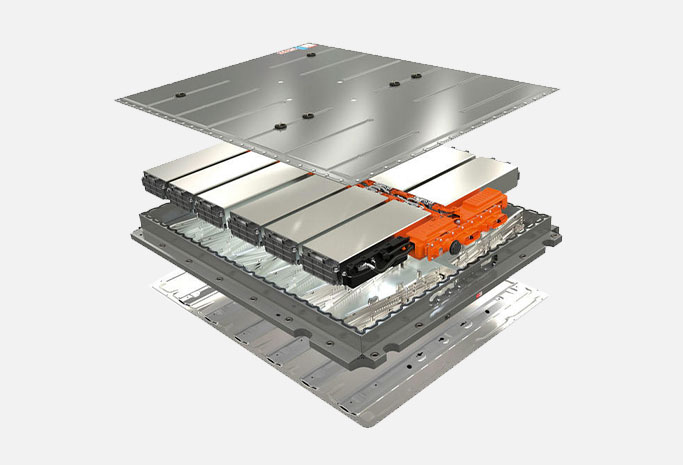
The EV battery tray is the load-bearing link between the battery pack and the chassis, so its material affects safety, range, and service life. As packs become more energy-dense, aluminum sheets for EV battery trays are replacing steel in many designs. 6061 aluminum sheet is one of the most practical choices because it balances strength, weight, weldability, and heat transfer—without over-engineering the material or driving up cost unnecessarily.
What the Tray Has to Deliver
A battery tray must:
- carry and secure battery modules
- protect parts from corrosion and aging
- support lightweight vehicle design
- fit cooling and assembly interfaces
Production routes vary—extrusion welding, casting, and sheet stamping/welding all appear in the market. Aluminum’s light weight and good strength make it a strong alternative to steel, especially where weight and thermal management matter. The tray also needs to hold its shape over years of vibration and temperature swings, so material consistency matters as much as the alloy grade itself.
Why 6061 Fits Tray Production
6061 is an Al-Mg-Si alloy that gains strength through heat treatment. It is not the strongest aluminum available, but it offers a useful balance for tray structures. The T6 temper provides moderate strength while retaining enough toughness for forming and joining.
- Corrosion resistance: performs well in humid, salty, and muddy road environments
- Weldability: suits friction stir welding and laser welding
- Machinability: cuts, bends, and drills cleanly for mounting holes and interfaces
- Stability: holds dimensions well after heat treatment
This combination makes 6061 easy to work with across different production steps—from cutting and stamping to welding and final assembly—without demanding special handling or excessive tooling changes.
Grade and Internal Quality Matter
For Aluminum Sheets for EV Battery Trays, ordinary architectural sheet is not enough. The Mg-Si ratio affects strength after heat treatment. Iron and copper need tight control; excess iron can create brittle phases and reduce toughness. Internal defects—inclusions, porosity, delamination, and oxide scale—must also be controlled. A hidden flaw can become a crack under vibration after the tray is installed. High-grade sheet with verified internal quality is essential for safety-critical parts.
Performance Indicators in Real Use
- Yield strength: resists dents and deformation from road impacts.
- Elongation: gives the material toughness so it can absorb impact instead of cracking.
- Thermal conductivity: helps move heat away from cells through the cooling structure.
- Residual stress: low stress helps large base plates stay flat after cutting and machining, so modules and cooling plates fit properly.
These indicators interact with each other. For example, higher strength often reduces elongation, so the aim is a balanced profile rather than maximizing a single value.
Where 6061 Delivers Value
1. Weight reduction: lower density than steel helps cut pack weight and support range.
2. Mechanical fit: moderate strength and toughness handle vibration and underbody impacts.
3. Thermal and corrosion performance: high conductivity and surface treatments support long service life.
4. Production readiness: mature welding, stamping, and machining support volume manufacturing.
As tray designs move toward integration and lightweighting, material choice should be based on the full process—forming, welding, machining, coating, and assembly—not just a data sheet.
What to Check Before Ordering
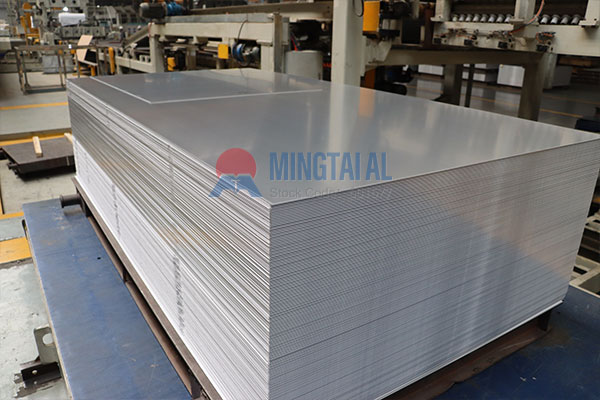
A practical specification should cover alloy and temper, flatness, internal quality, and welding compatibility. These points matter more than a single strength figure because the tray has to perform through forming, joining, coating, and vehicle use. It also helps to confirm that the supplier can deliver consistent flatness and surface quality across large-format sheets, since base plates often require wide panels with tight tolerances.
FAQ
Q: Why choose 6061 for battery trays?
A: It balances strength, weldability, corrosion resistance, and heat transfer.
Q: Is architectural-grade 6061 suitable?
A: No; tray parts need high-grade sheet with tight internal quality control.
Q: Which welding methods suit 6061?
A: Friction stir welding and laser welding are both practical.
Q: Does 6061 resist salt and moisture?
A: Yes; it performs better than many industrial aluminum alloys in corrosive conditions.
Q: Why is residual stress a concern?
A: It can cause warping and poor fit after machining.
Sourcing Sheet That Performs in Production
Look for a supplier that controls composition, internal quality, and flatness for tray applications. Henan Mingtai Al supplies 6061 Aluminum Sheets for EV Battery Trays, including base plate and reinforcement grades, with the strength, weldability, and corrosion performance needed in production.