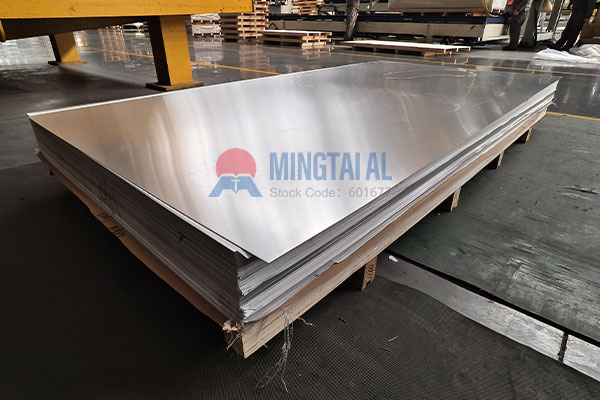
aluminum sheet for reefer container
The right aluminum sheet for reefer container must endure a brutal environment: constant salt spray, repeated condensation from temperature swings, and aggressive cleaning agents. Aluminum has long been the go‑to material for reefer manufacturing due to its light weight and natural corrosion resistance. But here’s the catch—selecting the wrong alloy or temper can cut service life by half, while the right choice delivers decades of reliable performance.
What corrosion threats does a reefer face?
- Marine salt spray – chloride ions attack the surface, triggering pitting
- Internal condensation – moisture from repeated cooling cycles keeps surfaces wet
- Chemical cleaners – improper detergents may degrade the oxide layer
- Galvanic corrosion – contact with steel fasteners or copper tubing creates a battery effect in humid conditions
These factors rarely act alone. Relying on “aluminum is corrosion‑resistant” is not enough—you need systematic control over alloy, temper, and specifications.
Workhorse alloys: 5083 and 5454
The 5xxx series (Al‑Mg) dominates reefer construction. Two grades stand out:
5083
- Excellent resistance to seawater, salt fog, and moisture
- Maintains toughness at low temperatures—ideal for frozen cargo
- Common thickness 4–12 mm; widths up to 2600 mm reduce weld seams and minimise crevice corrosion
5454
- Also Al‑Mg based, forms a stable passive film in saline environments
- Typical thickness 2.0–6.0 mm, usually supplied in H32 temper
- Suited for less demanding structural parts where formability matters
*5052 and 5754 are occasional alternatives for skin panels, but their overall corrosion performance is slightly below 5083.*
What matters more than the alloy grade? Temper and standard.
Many focus only on “5083” and ignore the suffix—that is a common mistake.
Different tempers give very different corrosion resistance:
- H116 / H321 – specially stabilised for marine service; excellent resistance to intergranular and exfoliation corrosion
- H111 / H112 – general‑purpose tempers, not recommended for long‑term offshore exposure
When specifying, always state Alloy + Temper + Standard – all three are essential.
On standards:
- ASTM B928 is the dedicated marine specification for high‑magnesium alloys. It adds extra corrosion testing and full traceability beyond general ASTM B209.
- Third‑party classification (CCS, ABS, BV, LR) provides strong independent verification of corrosion performance.
How to quickly evaluate sheet quality
Use this checklist when selecting material:
- Are the full technical details provided – alloy, temper, thickness, width, length, and standard?
- Is the temper H116 or H321 (not default H111)?
- Do the mill test certificates include heat/lot traceability and corrosion test results (salt spray or intergranular)?
- For volume orders, does the supplier have a proven track record of delivering similar marine‑grade material?
*(Note: our sheets are supplied in mill finish, without any surface treatment or further processing. Protective film can be applied upon request.)*
The economic value of proper selection
Do not judge by first cost alone. Look at the full lifecycle:
- Lower maintenance – corrosion‑resistant alloys outlast ordinary steel by a wide margin, reducing replacement frequency
- Fuel savings – at 2.7 g/cm³, aluminum cuts deadweight, directly lowering transport energy consumption
- Scrap value – aluminum is 100 % recyclable, retaining significant residual worth at end‑of‑life
Investing in certified marine‑grade material may cost a little more upfront, but the long‑term return is substantially better.
Corrosion resistance is not a number on a certificate—it is a chain of decisions from alloy to temper to standard. Every link affects how many years your reefer container will perform reliably in harsh ocean conditions. Ultimately, the durability of your equipment hinges on the quality of the aluminum sheet for reefer container you choose.
*Mingtai Aluminum supplies 5083, 5454 and other 5xxx‑series sheets for reefer applications, with thickness up to 200 mm and width up to 2650 mm, backed by CCS, ABS, BV and LR approvals.*
FAQ
Q: What is the best alloy for reefer corrosion resistance?
A: 5083 and 5454 are the top choices for seawater and salt‑spray environments.
Q: Why does temper matter so much?
A: H116 and H321 are specially stabilised to resist intergranular and exfoliation corrosion in marine conditions.
Q: Is ASTM B928 necessary?
A: Yes – it requires extra corrosion testing and traceability beyond general standards like ASTM B209.
Q: How can I avoid corrosion during storage?
A: Keep sheets dry, avoid contact with dissimilar metals, and use vapour‑barrier packaging.