aluminum plate for mold
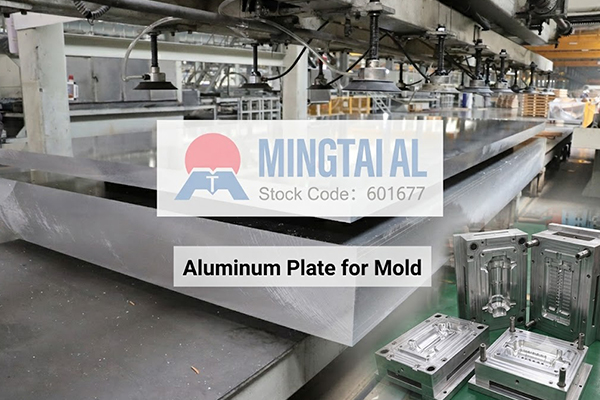
In mold manufacturing, selecting the right material is critical. Aluminum plate for mold has become a preferred choice for many production teams due to its light weight, good thermal conductivity, and excellent machinability. Among the common alloys 5052, 6061, and 7075, which one fits your project best? This guide will help you decide.
Why Use Aluminum for Molds?
Compared with traditional tool steel, aluminum offers clear advantages in several key areas.
- Faster machining – Aluminum cuts much more quickly than steel, significantly shortening mold production lead times.
- Better heat transfer – Its high thermal conductivity allows more uniform and rapid heating and cooling, which helps reduce the cycle time for each molded part.
- Lighter weight – Aluminum weighs about one‑third as much as steel. This makes handling and installation easier and reduces the load on your equipment.
- Lower overall cost – While the material price may not always be lower than steel, the combined savings from faster machining, less wear on tools, and reduced energy consumption often make aluminum the more economical choice.
Three Alloys, Three Personalities
Although 5052, 6061, and 7075 are all used in mold making, their distinct properties suit different applications.
5052 – The Corrosion Fighter
This aluminum‑magnesium alloy offers excellent formability and outstanding resistance to corrosion. It has the lowest strength among the three, but its anti‑rust performance is unbeatable.
Best for: Molds that need extreme protection against moisture or salt, such as rubber molds, low‑pressure molds, or those used in marine or humid environments.
In short: Choose 5052 when corrosion resistance and ease of forming are your top priorities, and high strength is not required.
6061 – The All‑Round Workhorse
6061 is an aluminum‑magnesium‑silicon alloy that can be heat‑treated. It offers the most balanced overall performance – moderate strength, good machinability, and decent corrosion resistance. That is why it is often called the “universal alloy” in the mold industry.
In the T6 temper, its tensile strength reaches around 290‑310 MPa. The T651 temper undergoes pre‑stretching to relieve internal stress, resulting in better dimensional stability and less distortion after machining – an important factor for high‑precision molds.
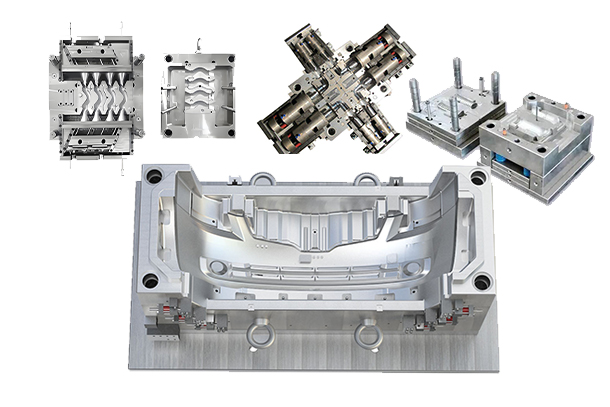
Best for: Injection molds, blow molds, shoe molds, undergarment molds, jig plates, and most general‑purpose mold applications.
In short: Choose 6061 when you need a cost‑effective, reliable option that works well for the vast majority of mold projects.
7075 – The High‑Strength Specialist
7075 is an aluminum‑zinc‑magnesium‑copper alloy and ranks among the strongest of all wrought aluminum alloys. Its strength can rival that of many steels. However, this comes with higher cost, poorer weldability, and lower resistance to stress corrosion cracking.
Best for: Die‑casting molds, blow molds, ultrasonic welding molds, aerospace‑grade molds, and other demanding applications where high strength is critical.
In short: Choose 7075 when you need strength close to steel and are willing to accept a higher material cost and more careful handling.
What to Check When Sourcing Mold Aluminum
Selecting the right alloy is only half the battle. Even within the same alloy, quality can vary. Pay attention to these four specifications:
- Flatness – This is one of the most critical indicators. Poor flatness can lead to deformation during machining, which directly affects final mold accuracy.
- Thickness tolerance – The smaller the deviation, the more precise the assembly will be. High‑quality plates can maintain very tight tolerances.
- Heat treatment temper – T6 provides high strength and is widely used; T651 adds stress relief, giving better flatness and less warping after cutting. If your mold requires tight dimensional stability, choose T651.
- Internal quality – The plate should be free from porosity, inclusions, and other defects. Reliable suppliers often perform ultrasonic testing to ensure sound internal structure.
Quick Selection Guide
|
Your need |
Recommended alloy & temper |
|
Injection, blow, or shoe molds – general use |
6061‑T6 / T651 |
|
High corrosion resistance (marine or humid environments) |
5052 |
|
High‑strength die‑casting or aerospace molds |
7075‑T6 / T651 |
|
Ultra‑high precision and long production runs |
T651 temper (any alloy) |
Choosing the right aluminum plate for mold is not about finding the “best” alloy in absolute terms, but rather the one that matches your specific application, accuracy requirements, and budget.
For a reliable supply of high‑precision aluminum plates for mold making, Henan Mingtai Aluminum offers consistent quality across 5052, 6061, and 7075 alloys, with strict control over flatness and thickness tolerances.
FAQ
Q: Which alloy is best for injection molds – 5052, 6061, or 7075?
A: 6061 is the top choice for injection molds because it balances performance, machinability, and cost.
Q: What is the difference between T6 and T651 temper?
A: T6 gives high strength, while T651 is pre‑stretched to relieve stress, making it more dimensionally stable after machining.
Q: Why is 7075 more expensive than 6061?
A: 7075 has a more complex alloy composition and requires stricter processing, but it delivers much higher strength for demanding applications.
Q: What thickness should I choose for a mold plate?
A: For small to medium molds, 20‑50 mm is common; larger base plates may require 50 mm or more.