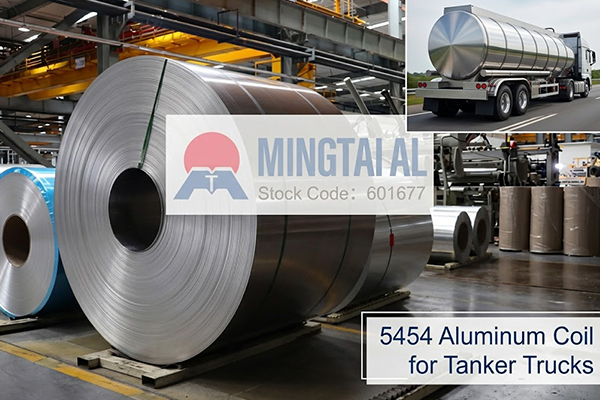
5454 Aluminum Coil for Tanker Trucks
The choice of material for tanker truck tanks directly impacts transport safety, operational efficiency, and maintenance costs. Among the many aluminum alloys available, 5454 Aluminum Coil for Tanker Trucks has become a popular solution in the industry, offering a well-balanced combination of properties. This article covers material characteristics, core advantages, application scenarios, and selection comparisons to help you fully understand the value of 5454 aluminum coil in tanker truck manufacturing.
Material Properties of 5454 Aluminum Coil
5454 belongs to the Al-Mg series of anti-rust aluminum alloys, with a magnesium content between 2.4% and 3.0%. As a non-heat-treatable alloy, its strength is primarily achieved through cold working.
Available Tempers: O, H111, H32, and others.
Thickness and Width: Thickness ranges from 6.00 to 8.00 mm, with widths up to 1500–3450 mm.
Applicable Standards: Complies with GB/T 3880, EN485, ASTM B209, and other international standards.
Key Applications in Tanker Trucks
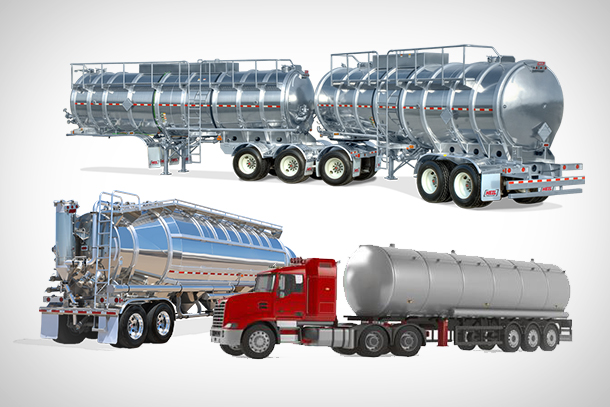
5454 aluminum coil is used in several critical components of tanker truck manufacturing:
Tank Shell (Barrel)
Some manufacturers choose 5454-H111 aluminum sheet for the main tank body, typically in thicknesses of 6–8 mm.
Baffle Plates (Anti-Slosh Plates)
This is the most important application for 5454. Baffle plates reduce liquid surging during transport, improving driving stability. The high strength and toughness of 5454-H32 ensure long-term structural reliability. Common thickness is 5–6 mm.
Heads (End Caps)
The heads at both ends of the tank require stretching and forming. 5454 in the O temper offers excellent plasticity, making it suitable for deep drawing, bending, and other complex forming processes.
Suitable Media
5454 aluminum sheet is suitable not only for petroleum products but also for:
- Chemical liquids
- Liquefied gases
- Food-grade liquids (such as milk and fruit juices)
Core Competitive Advantages
① Lightweighting
The density of 5454 aluminum is approximately one-third that of steel. Replacing carbon steel with 5454 aluminum coil for tanker manufacturing yields significant weight reduction. The direct benefits include lower fuel consumption and increased payload capacity—under the same legal weight limits, more cargo can be carried per trip, substantially improving per-trip economics.
② Corrosion Resistance
5454 aluminum coil offers excellent resistance to seawater, chlorides, acids, and alkaline solutions. Tanker trucks are constantly exposed to atmosphere, rain, and various transported media—5454 effectively resists corrosion and prevents tank leakage risks. Unlike traditional carbon steel tankers that require frequent anti-corrosion coating maintenance, 5454 aluminum tankers need virtually no anti-corrosion upkeep throughout their service life.
③ Weldability
5454 aluminum coil exhibits excellent weldability and can be joined using TIG, MIG, resistance welding, and other conventional methods. Welded joints maintain high strength and resist cracking, with no compromise to corrosion resistance. For fully welded tank structures, weld quality directly determines tank integrity and safety.
④ High-Temperature Stability
This is a key advantage that sets 5454 apart from other 5xxx series alloys. 5454-H32 offers excellent stress corrosion resistance in the 150°F to 300°F (approximately 65°C to 149°C) temperature range. This is particularly valuable for tankers transporting high-temperature liquids or operating in hot climates.
5454 vs. Other Aluminum Alloys for Tanker Applications
Common aluminum alloys used in tanker manufacturing include 5083, 5182, and 5454. Their positioning is as follows:
|
Alloy |
Key Characteristics |
Primary Applications |
|
5083 |
Good weldability, corrosion resistance, moderate strength |
Tank shell, heads |
|
5182 |
High elongation, excellent formability |
Heads (especially complex shapes) |
|
5454 |
Strong corrosion resistance, suited for elevated temperatures |
Internal baffle plates |
5083 offers higher strength and is the mainstream choice for tank shells. However, when tankers must operate long-term at elevated temperatures, 5454 holds an advantage in stress corrosion resistance. For internal baffle plates that require a balance of strength, corrosion resistance, and crack resistance, 5454 is the most balanced option.
Key Considerations for Sourcing 5454 Aluminum Coil
Which specifications and tempers to choose?
|
Component |
Recommended Thickness |
Recommended Temper |
Rationale |
|
Tank shell |
6–8 mm |
H111 or H32 |
Balances strength and formability |
|
Baffle plates |
5–6 mm |
H32 |
High strength, toughness, impact resistance |
|
Heads |
Depends on design |
O temper |
Good plasticity for deep drawing |
Quality standards to verify
5454 aluminum coil should comply with ASTM B209 and other applicable standards. Key parameters to verify include magnesium content (2.4%–3.0%) and tensile strength (H32 temper: minimum 250 MPa), as these directly determine service performance.
Why consider extra-wide coils?
Extra-wide 5454 aluminum coils (widths up to 2650 mm) can effectively reduce the number of welded seams in the tank shell. Fewer seams improve tank integrity and structural strength while lowering the risk of leakage associated with weld defects.
With its four core advantages—lightweighting, corrosion resistance, weldability, and high-temperature stability, 5454 aluminum coil has become an indispensable material in tanker truck manufacturing. Whether for tank shells, baffle plates, or heads, 5454 helps deliver both safety and cost efficiency.
Henan Mingtai Aluminum offers a full range of 5454 aluminum coils, covering thicknesses from 0.2 to 10 mm and widths up to 2650 mm, with various tempers including O, H111, and H32 available for customization. All products comply with ASTM B209 and other international standards. Inquiries are welcome.
FAQ
Q1: Which tanker truck components use 5454 aluminum coil?
A: Mainly tank shells, baffle plates, and heads.
Q2: What is the difference between 5454 and 5083 for tanker applications?
A: 5083 offers higher strength for tank shells; 5454 offers better stress corrosion resistance at elevated temperatures.
Q3: How weldable is 5454 aluminum coil?
A: Excellent weldability with TIG, MIG, and resistance welding; joints stay strong and crack-free.
Q4: How much weight can 5454 aluminum save compared to steel?
A: Aluminum tankers using 5454 are roughly 3–4 tons lighter than steel tankers of similar size.
Q5: What media can 5454 aluminum coil handle?
A: Petroleum products, chemicals, liquefied gases, and food-grade liquids.
Q6: What tempers are available for 5454 aluminum coil?
A: O, H111, H32, and others.
Q7: What thickness and width are typical for 5454 tanker coils?
A: Common thickness 6–8 mm; widths up to 1500–3450 mm.
Q8: Which international standards does 5454 aluminum coil meet?
A: GB/T 3880, EN485, ASTM B209, and others.