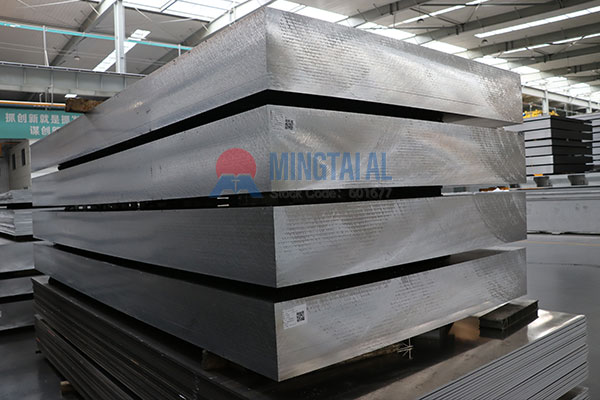
6061 t6 aluminum plate
If you are searching for 6061 t6 aluminum plate, you likely want to confirm whether it can meet your strength, machining, flatness, and delivery requirements. This guide answers the key questions from a practical, application-focused perspective.
What Is 6061 T6 Aluminum Plate?
6061 is an aluminum-magnesium-silicon alloy that can be strengthened by heat treatment. The T6 temper involves solution heat treatment, quenching, and artificial aging, creating a strong balance of strength, corrosion resistance, and machinability. It stands out for its overall performance, cost efficiency, and reliable supply.
Key advantages:
- Good strength-to-weight balance for lightweight structures
- Resistance to atmospheric and industrial corrosion
- Stable performance in CNC cutting, drilling, and milling
- Good thermal conductivity for heat dissipation parts
T6 vs. T651: How to Choose
This is one of the most common questions during quoting and material selection. T6 and T651 are nearly identical in strength, hardness, and corrosion resistance. The main difference lies in internal stress and dimensional stability. After quenching and aging, T6 plate still retains residual stress. Heavy milling or significant material removal can release that stress and cause warping, bending, or loss of flatness—especially in thin-walled or large parts.
T651 adds a controlled stretch after aging, which greatly reduces internal stress while maintaining mechanical properties close to T6. In other words, T651 is not "stronger"—it is "more stable." If later machining requires high precision, or the part cannot tolerate distortion during assembly, T651 is usually the better choice.
Selection guide:
1. Large-area precision milling, thin walls, or heavy material removal: choose T651 for more stable dimensions after machining.
2. Standard cutting, drilling, or non-precision structural parts: T6 is more economical and usually sufficient.
3. Unsure: consider material removal, flatness, and assembly precision. The higher the requirements, the more T651 makes sense.
Machining and Welding Performance
CNC machining: T6 offers good machinability, smooth chip evacuation, and consistent surface finish. For thin walls or heavy material removal, T651 has lower internal stress and a lower risk of distortion after precision milling.
Welding: TIG or MIG can be used, but the heat-affected zone will lose some strength. Structural parts should be designed with appropriate allowances.
Bending and forming: T6 is relatively hard, and tight-radius cold bending can lead to cracking. When forming is required, consider using O temper, forming it, and then heat treating it—or design with a larger bend radius.
Surface treatment and further finishing are usually handled by downstream specialists; our focus is on aluminum plate supply itself.
Typical Applications
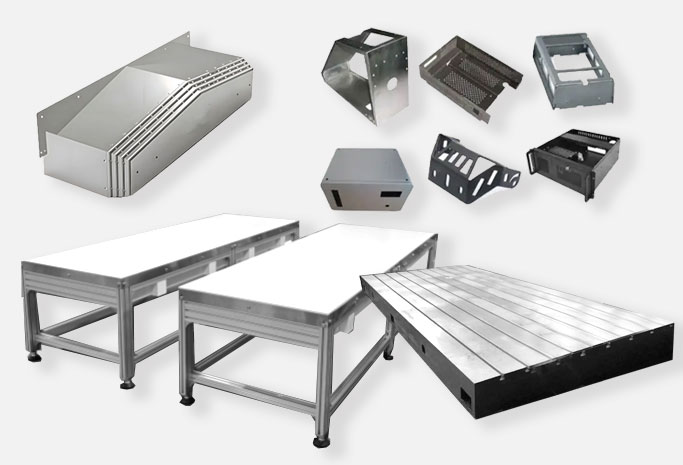
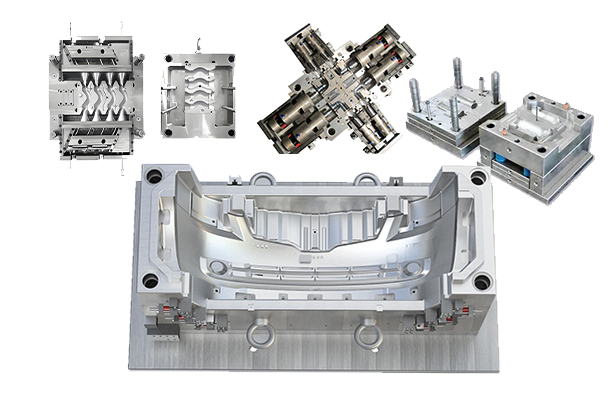
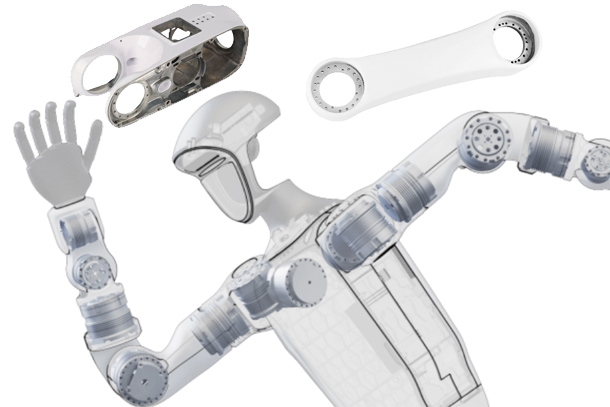
This material is used across a wide range of industries: aerospace structural brackets and panels; automotive and rail bodies, chassis, and battery trays; automation and precision equipment fixtures, bases, and jigs; mold bases, cooling plates, and heat sinks for molds and electronics; and corrosion-resistant structural parts for marine and construction. These applications value not a single peak property, but the combination of strength, corrosion resistance, stable machining, and reliable supply.
What to Confirm Before Ordering
To get accurate pricing and lead times, it helps to specify:
1. Alloy and temper: state 6061-T6 or T651 clearly to avoid internal stress issues in later machining.
2. Dimensions, thickness, and tolerances: include length, width, thickness, and critical tolerances for accurate quoting.
3. Flatness requirements: especially important for large plates, as it directly affects machining and assembly.
4. Material certificates and standards: provide the applicable standard for inspection and acceptance.
5. Quantity, lead time, and packaging: clarify batch size, delivery schedule, and packing method to reduce back-and-forth.
The more complete the information, the more accurate the quote and lead time.
FAQ
Q: Can this alloy be welded?
A: Yes, usually with TIG or MIG, though the heat-affected zone will lose some strength.
Q: What is the difference between T6 and T651?
A: Mechanical properties are similar, but T651 is stretch-relieved to reduce internal stress, making it better for precision machining.
Q: Can this material be bent?
A: T6 has limited bendability; for tight radii, use O temper and heat treat after forming.
Q: What information is needed for a quote?
A: Alloy and temper, dimensions, tolerances, flatness, quantity, and standards.
Mingtai Al Industry supplies 6061 t6 aluminum plate in a full range of sizes, with material certificates and stable lead times. Contact us for pricing and technical data.