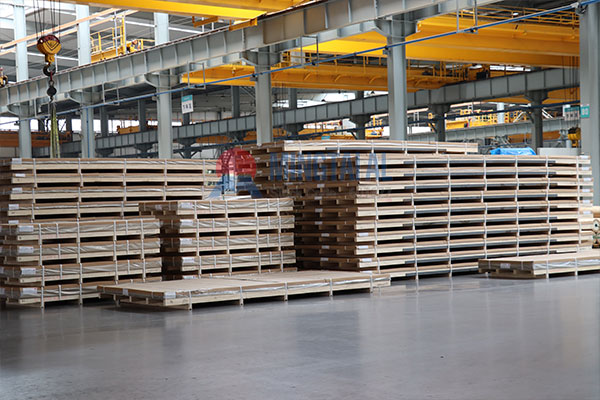
5454 aluminum sheet
Why 5454 Aluminum Sheet Earns Its Place Where 5083 Stops Being Comfortable
Most 5xxx aluminum alloys are chosen for corrosion resistance or marine duty. The 5454 aluminum sheet is chosen for a narrower, more demanding job: staying stable when the metal itself gets warm. Its magnesium level is deliberately held below the threshold where sensitization begins, so welded tanks, heat exchangers, and process vessels can run at temperatures that would make higher-magnesium grades a liability. If your service window sits above ambient but below the point where aluminum loses structural relevance, this alloy is not a compromise—it is the correct starting point.
Chemistry Is Not a Formality Here
5454 is a non-heat-treatable Al-Mg-Mn alloy. It gains strength from magnesium in solid solution plus cold work, not from thermal treatment. That matters because welding does not undo a hardening mechanism it never relied on. The moderate magnesium range is the design feature, not an accident of specification.
|
Element |
Range (%) |
What It Does |
|
Mg |
2.4 – 3.0 |
Solid-solution strengthening; kept moderate to limit β-phase precipitation |
|
Mn |
0.50 – 1.00 |
Grain refinement; supports strength retention at temperature |
|
Cr |
0.05 – 0.20 |
Improves resistance to stress-corrosion cracking |
|
Cu |
≤ 0.10 |
Tightly controlled; excess copper invites pitting in chloride service |
|
Al |
Balance |
Matrix |
The chromium addition is easy to overlook and worth understanding. It works alongside manganese to keep grain structure stable, which is precisely what gives 5454 its edge over leaner 5xxx grades when the thermometer climbs.
Tempers: Match the Sheet to the Forming Operation, Not to a Habit
Four tempers cover most 5454 aluminum plate and sheet demand. The differences are not cosmetic—they change how the material behaves under a press brake, a roller, or a welding torch.
O and H111 are the forming tempers. Choose them when the job involves dished heads, deep draws, or tight bend radii. Strength is lower, but ductility is at its highest.
H32 is the default for tank shells and structural panels. It carries enough cold work to deliver useful strength while remaining weldable and formable in ordinary shop practice.
H34 steps strength up further. It suits stiffened panels and applications where deflection control matters more than bend radius.
H112 is a hot-worked condition without additional strain-hardening control. It appears in thicker plate and non-critical formed parts where the priority is availability and weldability rather than a tight strength window.
A practical rule: specify H32 unless a drawing operation or a strength calculation tells you otherwise. Most supply-chain confusion on 5454 starts with ordering O temper for a job that only needed H32.
The Welding Decision Is Really a Filler Decision
5454 welds cleanly with conventional TIG and MIG processes. The part that determines joint performance is the filler wire.
- ER5554 is the matching choice. Its magnesium range mirrors the base metal, which keeps weld-metal composition and anodized color response consistent across the joint.
- ER5356 is the higher-strength alternative. It is useful where joint strength governs the design, though color match after anodizing is less exact.
- Soldering and brazing are not recommended routes for this alloy.
As-welded joints in 5454 commonly achieve the high 80s to low 90s as a percentage of parent-metal strength with ER5554 or ER5356. For design checks, applying a joint efficiency below that achieved value is standard practice and gives margin for heat-affected-zone softening.
Where the Alloy Actually Goes
The application list for 5454 aluminum sheet is shorter and more specific than the generic “5xxx” label suggests.
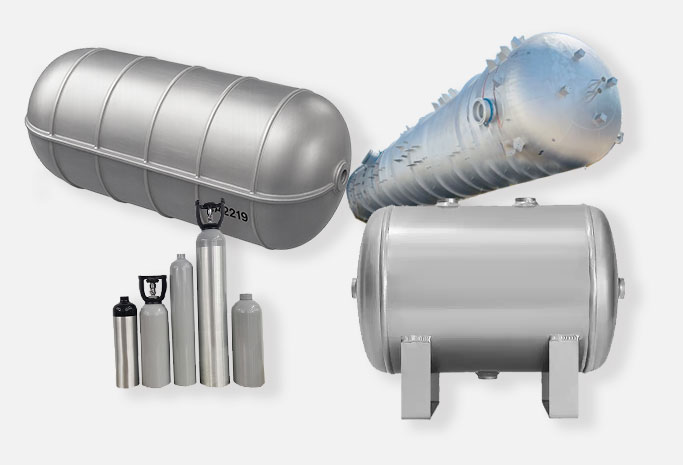
1. Road tanker barrels and heads for hot asphalt, emulsions, and warm chemical media. Shells in H32; dished heads and flanged ends in O temper.
2. Fuel tanks and heater reservoirs where light weight and leak-tight welded seams matter more than peak strength.
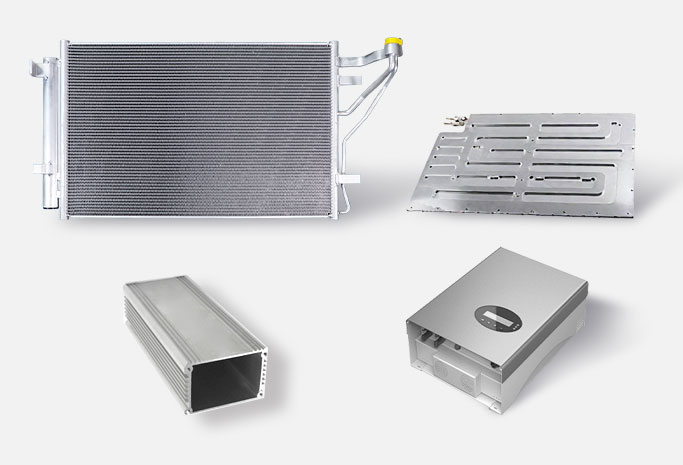
3. Heat-exchanger end plates, vessel liners, and structural brackets that see service temperatures above what 5052 or 5083 will tolerate without property loss.
4. Refrigerated transport panels, container components, and stage or mast structures where moderate strength plus formability and weldability drive the material call.
The common thread is not “corrosive enough for 5083.” It is “warm enough that 5083 becomes the wrong bet.” SAE technical work on automotive 5xxx selection puts it directly: where elevated temperatures cannot be avoided, 5454 is chosen because it is almost not susceptible to intergranular corrosion even under prolonged warm exposure, whereas 5083 becomes vulnerable.
A Note on Marine Use
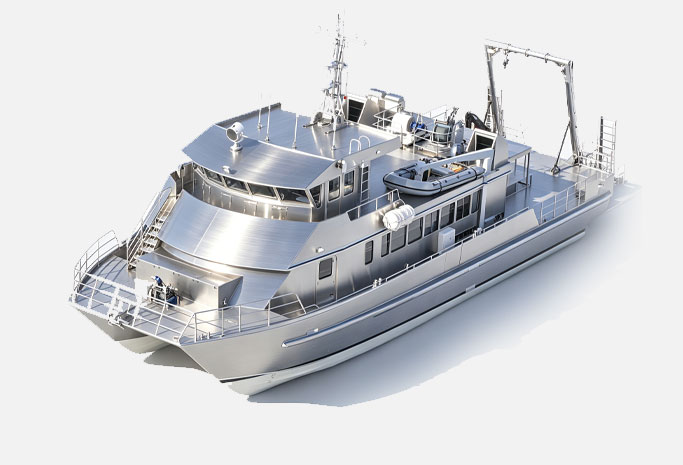
5454 is sometimes marketed as a marine alloy, and it does perform well in atmospheric and splash-zone conditions. But full immersion and continuous seawater contact remain territory for 5083 and 5086 with coating and cathodic protection. Treat 5454 as the warm-service and general-corrosion option, not as a blanket substitute for the higher-magnesium marine grades.
FAQ
Q: Can 5454 be heat treated to a higher strength?
A: No. It is non-heat-treatable; strength comes from cold work and solid solution.
Q: Is 5454 stronger than 5052?
A: Yes, typically by a noticeable margin in comparable tempers.
Q: What filler wire matches 5454 best?
A: ER5554 for composition and color match; ER5356 when higher joint strength is needed.
Q: Does 5454 replace 5083 in tanks?
A: Only where service temperature makes 5083’s sensitization risk relevant. Cold marine service still favors 5083.
Q: Which temper is standard for tanker shells?
A: H32 is the usual starting point; O temper is reserved for formed heads and deep-drawn parts.
Getting the Specification Right the First Time
The value of 5454 aluminum sheet lies in a specific combination: enough magnesium to strengthen, not enough to sensitize; enough manganese and chromium to stabilize the grain structure through welding and warm service; and a temper range wide enough to cover both formed heads and rolled shells. Match the temper to the operation, the filler to the joint requirement, and the alloy to the temperature—not to a generic “5xxx” habit.
Henan Mingtai Aluminum Industry supplies 5454 aluminum sheet and plate across O, H32, H34, H111, and H112 tempers for warm-service tank, heat-exchanger, and welded structural applications. Technical inquiries and temper-specific availability can be directed to the contact details below.
Email: vip@mingtai-al.com
Phone / WhatsApp: +86-18638268963
Office: NO.11 Changchun Road High & New Tech Zone Zhengzhou, Henan, China
Factory: No.162, Jinbai Road High & New Tech Zone Zhengzhou, Henan, China