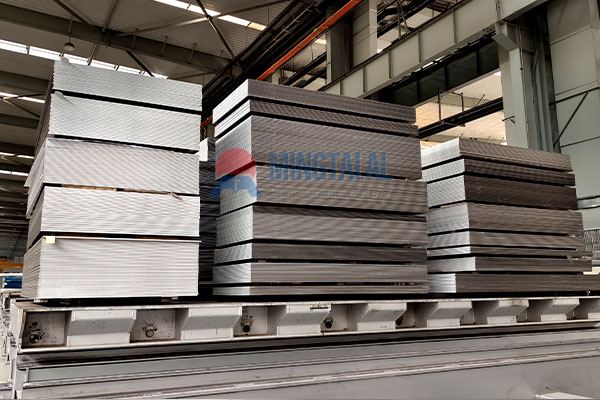
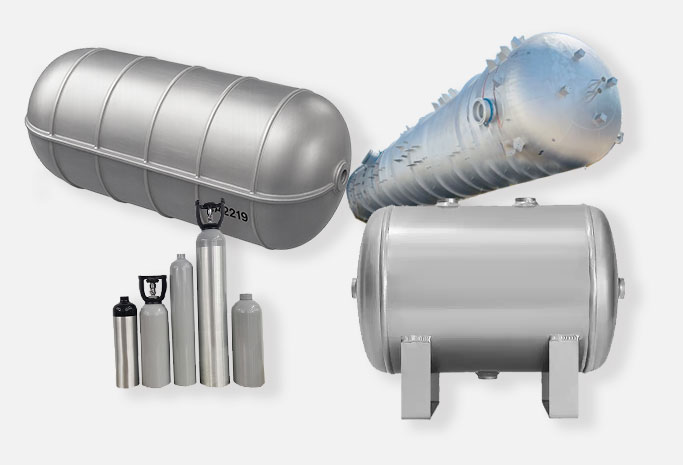
5083 Aluminum sheet for Pressure Vessels
Pressure vessels leave little room for material mistakes. Whether the application is a cryogenic storage tank, a tanker truck body, or an offshore pressure cabin, the plate must weld well, resist corrosion, and hold up under long-term service. That is why 5083 aluminum sheet for pressure vessels is widely specified for low-to-medium pressure, low-temperature, and corrosive environments. It offers a practical balance of strength, formability, weldability, and weight savings.
What Is 5083?
5083 is an aluminum-magnesium alloy from the 5xxx series. Magnesium is the main strengthening element, with small additions of manganese and chromium to support corrosion resistance and control recrystallization.
Unlike heat-treatable alloys such as 6061, 5083 is not strengthened by T6 quenching and aging. Its strength comes from solid-solution strengthening and work hardening. For pressure vessel work, that trade-off is often an advantage:
- Strength loss after welding is limited.
- Formability is good for rolling and deep drawing.
- Low-temperature toughness is reliable.
- Corrosion resistance is strong in marine and industrial atmospheres.
In simple terms, 5083 is built for tanks that need to be rolled, welded, and kept in service without becoming brittle.
Typical Chemical Composition & Mechanical Properties (O Temper)
|
Item |
Typical Value |
Notes |
|
Main alloying elements |
Mg 4.0–4.9%; Mn 0.4–1.0%; Cr 0.05–0.25% |
Mg drives strength; Mn and Cr suppress recrystallization and improve corrosion resistance |
|
Tensile strength (O) |
≥270 MPa |
Annealed condition, good formability for deep drawing and coil rolling |
|
Yield strength (O) |
≥115 MPa |
— |
|
Elongation (O) |
≥12% |
— |
Typical values only. Actual properties are confirmed by the mill test certificate for each batch.
Why It Works in Pressure Vessel Service
Corrosion resistance without heavy coating dependence
5083 forms a natural oxide film that performs well in fresh water, seawater, many neutral chemicals, and industrial air. For marine and chemical service, this can reduce coating maintenance and extend service life.
Welding that keeps the joint strong
With a suitable filler wire, 5083 welds can retain a high level of parent-metal strength, and post-weld heat treatment is usually not required. This matters on large tank bodies where re-heat treatment is impractical. By contrast, 6xxx alloys can soften in the heat-affected zone after welding.
Low-temperature toughness
5083 does not show the ductile-to-brittle transition that carbon steel does at low temperatures. That is a key reason it is used in LNG and cryogenic tank construction.
High specific strength
5083 is light and strong. Replacing steel plate with 5083 aluminum plate in transport tanks can reduce tare weight and leave more room for payload under fixed weight limits.
Where 5083 Plate Fits
In practice, 5083 aluminum sheet for pressure vessels is used across several demanding applications:
LNG storage and receiving terminals
Inner tank wall panels, suspended decks, and bottom structures benefit from 5083’s cryogenic toughness and weldability. Wide plate formats can reduce longitudinal weld seams.
Transport tank bodies
Road and rail tankers use 5083 for LNG, liquid oxygen, liquid nitrogen, and certain chemical liquids. Its fatigue strength helps handle vibration and road impact.
Marine and offshore equipment
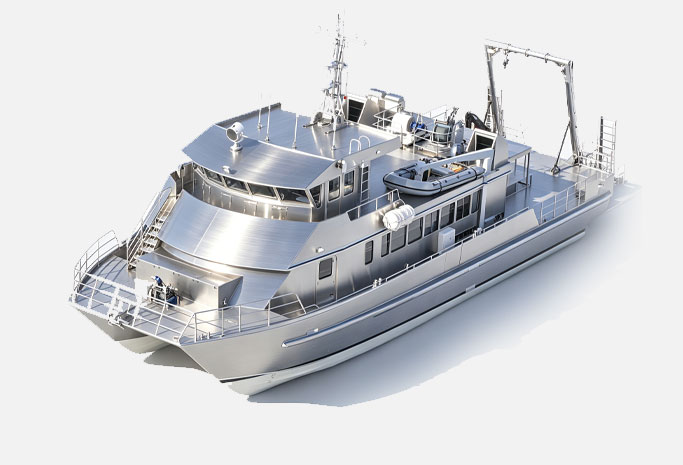
Marine fuel tanks, offshore pressure vessels, and piping systems use 5083 for its seawater corrosion resistance.
Chemical and specialty vessels
Where corrosion resistance is the priority, 5083 plate is often considered for reactors and related equipment.
What to Confirm Before Ordering
A good specification starts with the service condition, not just the alloy name.
1. Choose the right temper
O temper is common for deep drawing. H112 suits general welded structures. H321 is used where higher strength and stress-corrosion resistance are needed.
2. Check internal quality
Pressure vessel plate should be inspected for internal defects such as delamination and inclusions. Surface should be clean, oil-free, and scratch-free.
3. Qualify the welding procedure
Heat input and filler metal should match the plate thickness. Non-destructive testing should confirm joint quality.
4. Review traceability
Mill test certificates and inspection reports should accompany the shipment.
FAQ
Q: Is 5083 aluminum sheet for pressure vessels suitable for cryogenic service?
A: Yes—5083 keeps good toughness at low temperatures and is widely used in LNG and cryogenic tanks.
Q: Can 5083 be welded without post-weld heat treatment?
A: Yes—with the right filler wire, 5083 welds normally do not require post-weld heat treatment.
Q: Which temper should I choose?
A: O for deep drawing, H112 for general welded structures, and H321 where higher strength and stress-corrosion resistance are needed.
Q: Does 5083 resist seawater?
A: Yes—5083 is a common choice for marine and offshore applications.
Ready to Specify Your Plate?
Henan Mingtai supplies 5083 aluminum plate for pressure vessel applications, with multiple specifications and tempers available.
Phone / WhatsApp: +86 186 3826 8963
Email: vip@mingtai-al.com
Material certificates, inspection reports, and custom production are all available—reach out and we'll get you a material solution quickly.