5182 aluminum coil for can tab
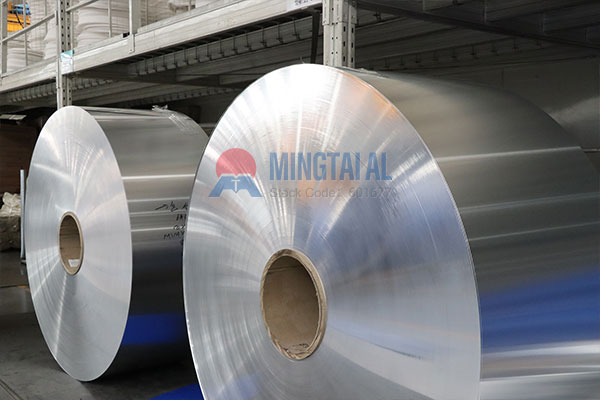
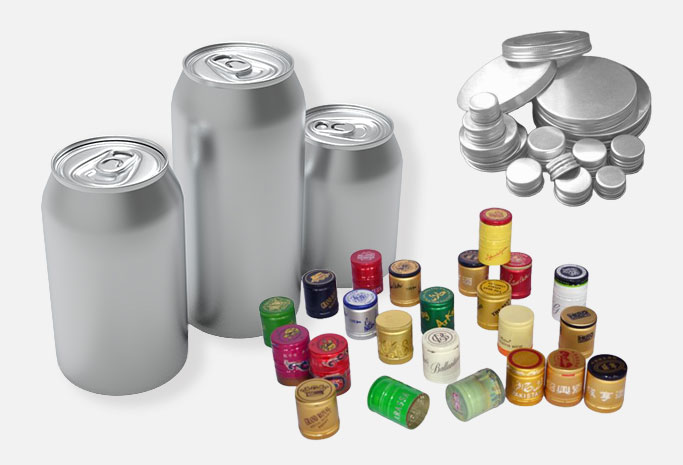
A can tab looks small and light, yet it must withstand concentrated pulling force the moment the can is opened and complete scoring, riveting, and curling in high-speed stamping. If the material is wrong, the tab may crack, deform, or feel difficult to open. 5182 aluminum coil for can tab is widely regarded as a key material choice because of its high tensile strength, good formability, and corrosion resistance. This article looks at properties, comparisons, specifications, quality, and compliance to help you judge whether it fits your production line.
Where the High Strength of 5182 Aluminum Coil Comes From
5182 belongs to the Al-Mg series, with magnesium as the main strengthening element. Its high strength comes from:
- Magnesium – solid-solution strengthening for higher strength
- Manganese – improved corrosion resistance and strength stability
- Other elements – supporting overall performance
For tab production, it is often supplied in fully hard tempers such as H19 to balance strength and spring-back control. The exact temper should still be selected according to the stamping dies, tab design, and line speed.
High strength does not mean poor formability. The real key is the balance between strength and forming performance.
What High Tensile Strength Means in Tab Opening and Stamping
A tab must take concentrated opening force and keep its shape in thin-wall designs. The role of high tensile strength can be seen in two ways:
- If strength is too low – the tab may deform or break during opening.
- If formability is poor – cracking can occur during scoring, riveting, or curling.
The high tensile strength of 5182 helps maintain load-bearing capacity after thinning and supports stable feeding and positioning in high-speed stamping. A suitable match between strength and elongation also reduces spring-back variation, making stamping parameters easier to control.
Why Tabs Often Use 5182 While Can Ends Often Use 5052
- 5182: higher magnesium content, stronger and better weldability, suitable for tabs that must bear opening force.
- 5052: good deep drawing and forming performance, often used for can ends and other parts requiring complex shaping.
- They are not simple substitutes for each other; they are selected by part function.
The joint between tab and can end often involves riveting or welding. The better weldability of 5182 helps ensure joint strength. This is also the technical logic behind searches for 5182 aluminum coil for can tab.
Key Requirements for Aluminum Coil in Tab Manufacturing
1. Strength consistency: The smaller the batch-to-batch property variation, the more stable the stamping parameters and the easier it is to control burrs and cracking.
2. Surface quality: Scratches, oil stains, peeling, and similar defects can affect scoring and die life.
3. Thickness and flatness: Uniform thickness and flat shape help feeding and positioning in high-speed stamping.
4. Internal stress and spring-back control: A suitable internal stress state can reduce deformation after stamping and improve tab dimensional consistency.
5. Dimensional fit: Width, thickness, and coil weight can be coordinated with tab line requirements.
6. Supply continuity: Tab stock is consumed steadily, so supply capacity and delivery management matter just as much.
Our aluminum coil is supplied mainly in base condition. We do not carry out coating, anodizing, or other surface treatment, nor do we perform further processing.
Food Contact and Corrosion Resistance
Beverage environments can be mildly acidic. Under proper use conditions, 5182 Al-Mg alloy offers good corrosion resistance, and relevant compliance documents can be provided according to food-contact regulations.
For tab products aimed at international markets, material traceability and batch records are also worth attention. Compliance documents, test reports, and stable batch management can help reduce hidden costs in later audits and line changes.
Questions Worth Confirming During Selection
- Does your tab design prioritize tensile strength or the forming window?
- What thickness tolerance, flatness, and coil diameter does the stamping line require?
- Are third-party test reports or food-contact compliance certificates needed?
- Can the supplier maintain stable long-term supply and batch consistency?
- Can samples be provided for trial stamping before a bulk order?
These questions often determine final yield more than price alone.
Henan Mingtai Al. supplies 5182 aluminum coil for tab stock and other applications, with specification communication, samples, and batch traceability support. Contact us for a solution suited to your production line.
FAQ
Q1: What temper is typically used for 5182 aluminum coil in tab production?
A: It is commonly supplied in fully hard tempers such as H19, depending on the stamping process and tab design.
Q2: Can 5052 aluminum coil replace 5182 for tabs?
A: 5052 is often used for can ends and deep-drawn parts, while 5182 is preferred for tabs because of its strength and weldability.
Q3: Does Mingtai provide surface-treated 5182 aluminum coil?
A: Mingtai supplies base-condition aluminum coil; coating, anodizing, and other surface treatment are handled downstream.
Q4: How can suitability be confirmed for a specific tab line?
A: Share the thickness, width, temper, and stamping requirements, then verify through samples and trial stamping.